Options Prop Firms: Which Firms Actually Allow Options, on What Terms, and How to Trade Them
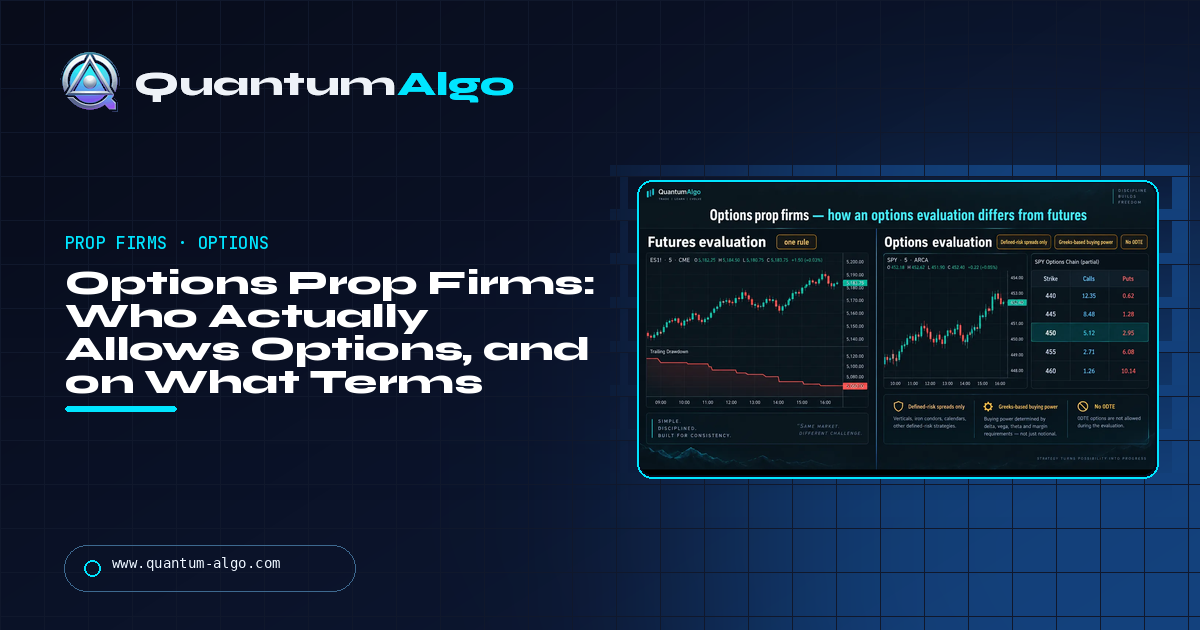
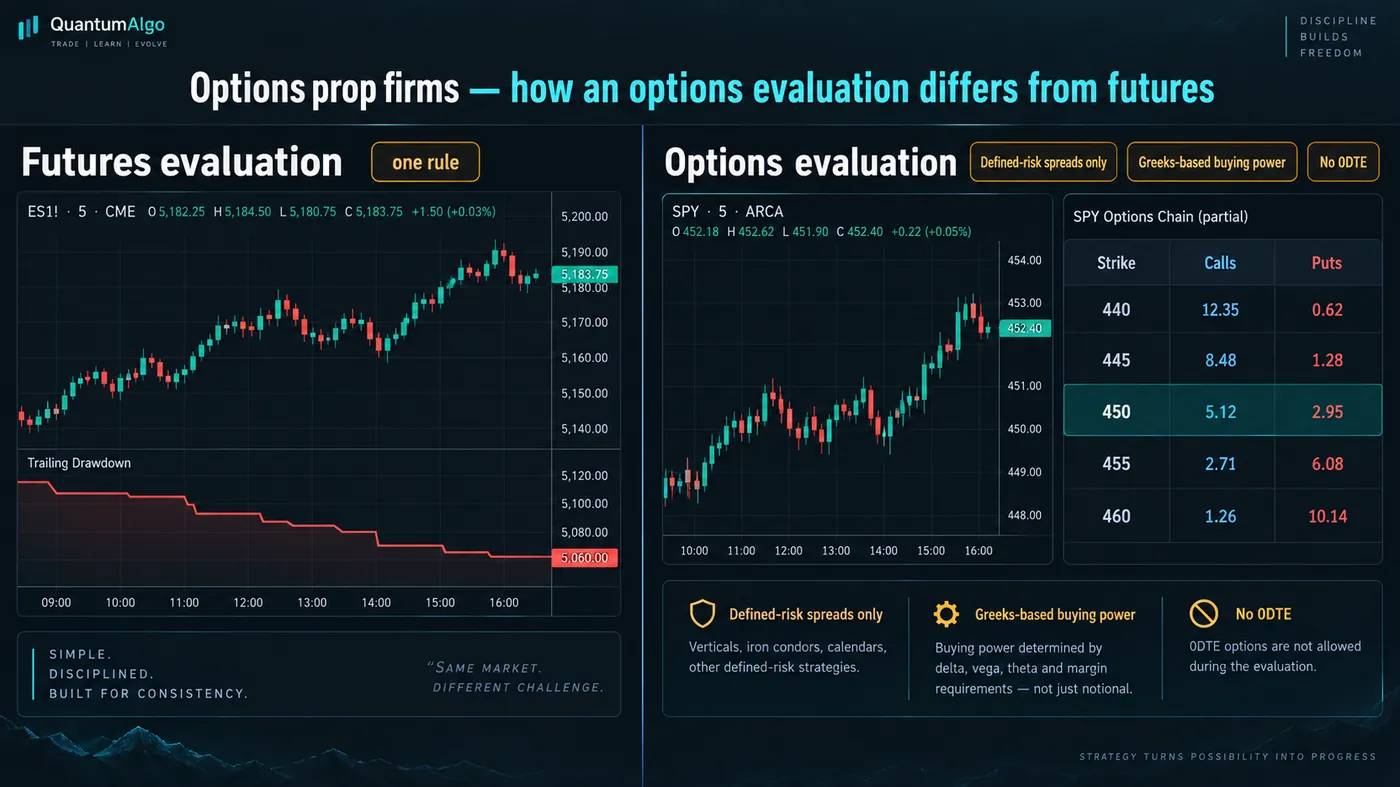
Options prop firms are rare because options break the one-number risk model evaluation firms depend on — gap risk, buying power that moves with volatility, assignment and wide spreads. What exists falls into three groups: desk-style firms trading real capital that want trained, often licensed traders (Maverick Trading, T3 Trading Group, SMB Capital); a very small number of evaluation or instant-funding firms that allow equity options on strict terms (Funder Trading, on a subscription); and futures prop firms that permit options on futures inside a normal futures account (Topstep and Elite Trader Funding are named — check the permitted-products list). Every one enforces the same rules: defined-risk spreads only, buying power on maximum loss, 0DTE barred or capped, daily loss measured on equity. Read the instrument list before the fee.
Search for options prop firms and you will find the same handful of names copied between lists, some of which stopped offering options a year ago. The truth is less tidy and more useful: a dedicated evaluation firm for listed equity options barely exists, but there are three real routes to trading options with someone else's capital, and each has rules that decide in advance whether your strategy can be placed at all. This page is the three routes and the named firms in each as of September 2026, the four rules every options evaluation enforces and why, how to choose in order, a spread sizer built to the same arithmetic the risk desk uses, an ES options trade worked inside a futures evaluation, and the mistakes that turn a fee into a donation.
Indicators that prove themselves in public.
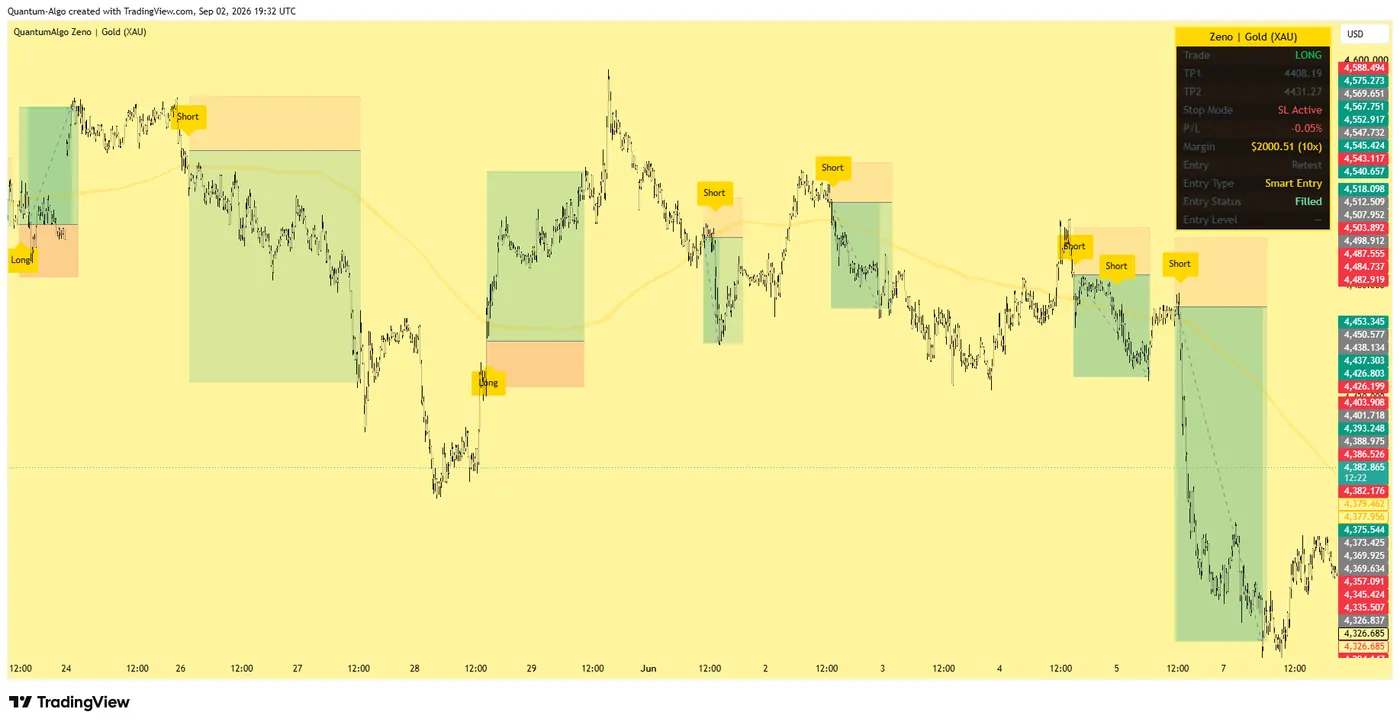
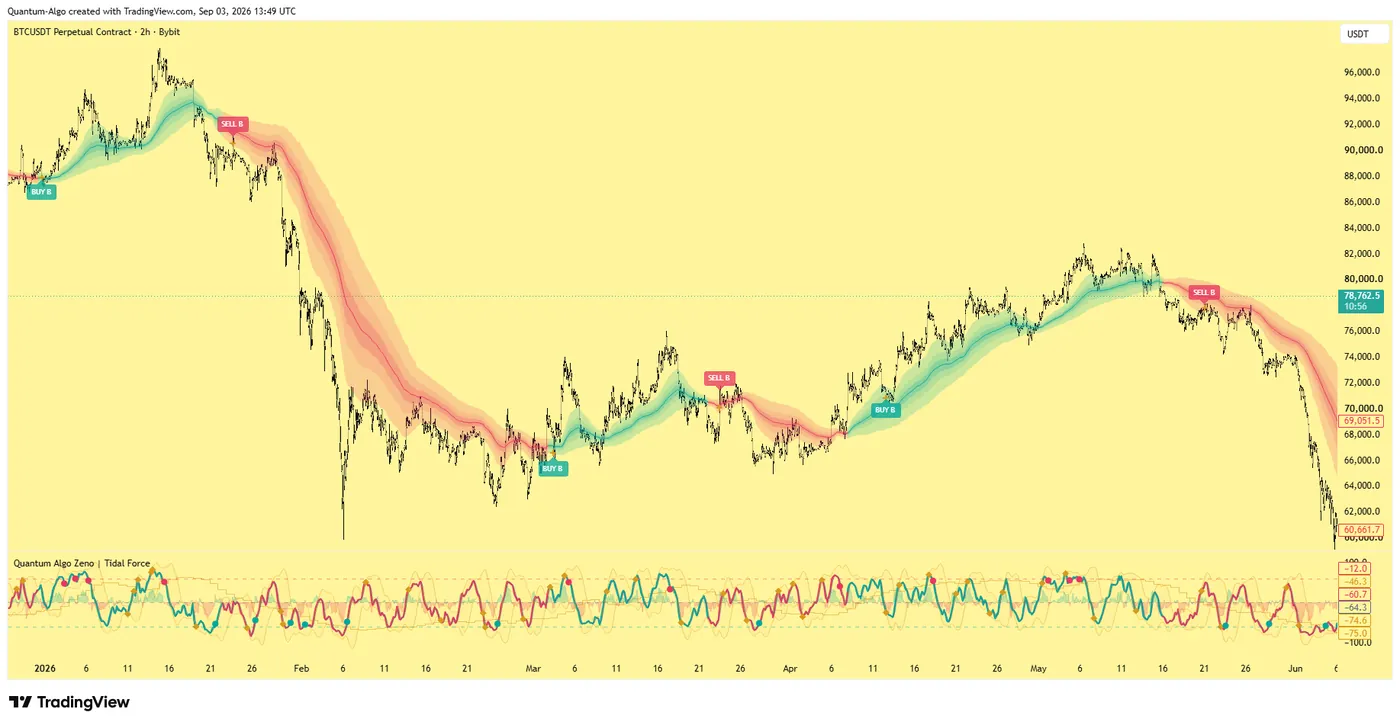
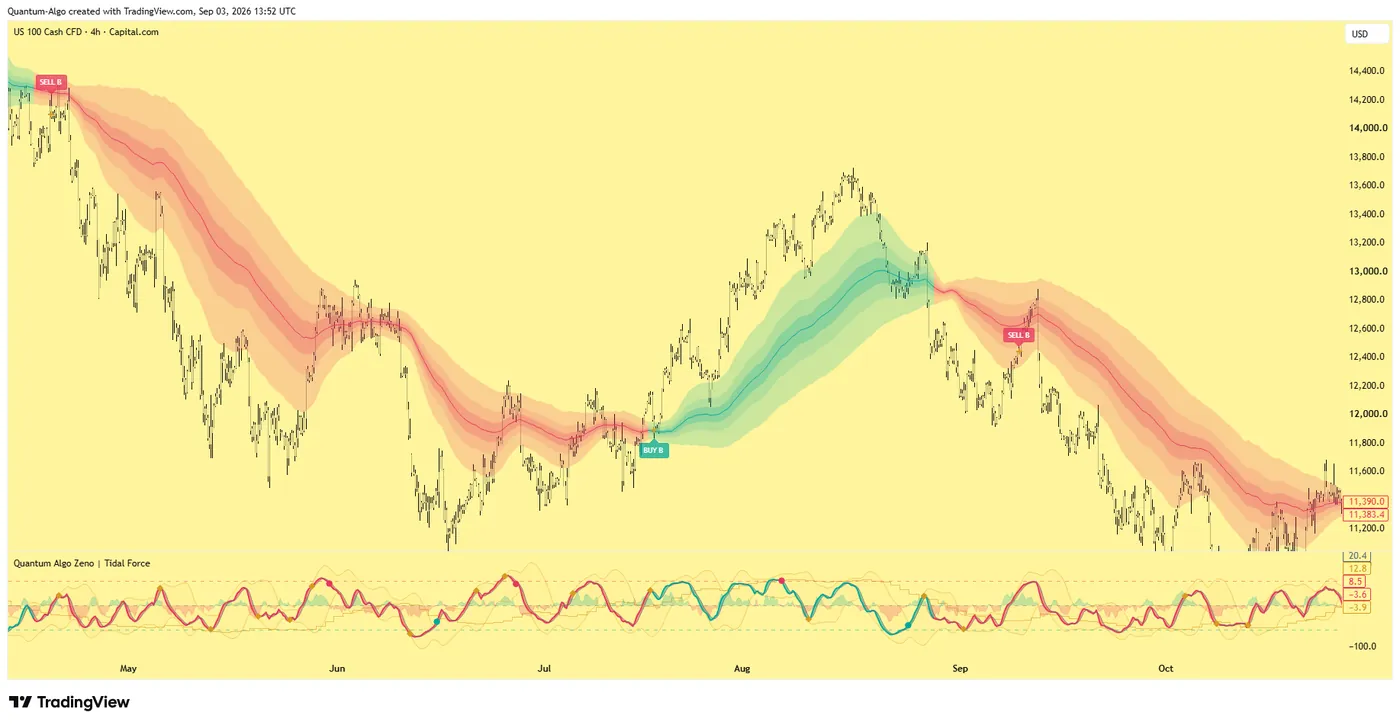
One engine, four precision tools — the Gold (XAU) Scalper, the institutional Gravity Zone, the Zeno momentum Oscillator, and Zeno Stocks for equities.
Why options prop firms barely exist
Ask for a list of options prop firms and you get the same five names recycled from one another, half of which have quietly stopped offering options or never did. That is not laziness on the part of the list-writers; it is the product. A prop firm in the evaluation model sells a simulated account with a drawdown rule and pays a share of simulated profits. That works for futures and CFDs because one number — the account's open equity — tells the firm everything it needs to know, at every tick, for every trader on the book.
Options break that. A short put looks flat until the underlying gaps, then it is a loss the drawdown rule never saw coming. Buying power is not a fixed margin per contract; it moves with implied volatility and the Greeks. A position held into expiry can be assigned and turn into stock over a weekend. And the bid–ask on anything but the most liquid strikes is wide enough that a simulated fill and a real one are different trades. Every one of those is a way for the firm's risk model to be wrong, which is why most firms that tried it — SurgeTrader being the well-known case, which shut down in 2024 — either withdrew options or withdrew altogether.
So the honest map has three territories, not a league table: desk-style firms that trade real capital and want licensed, trained traders; a very small number of evaluation firms that allow equity options on strict terms; and futures firms that let you trade options on futures as part of a futures account. Which one you belong in is decided by what you trade, not by the fee.
The three kinds of "options prop firm"
| Model | How you get in | Capital | What you can trade | Examples (checked September 2026) |
|---|---|---|---|---|
| Desk-style equity options firm | Application, training, sometimes a capital contribution or exam sponsorship | Real firm capital | Multi-leg equity and index options, subject to the desk's risk rules | Maverick Trading (equity and index options, split starting around 70% and scaling); T3 Trading Group (SEC broker-dealer, sponsors SIE and Series 57); SMB Capital (desk that has always run options) |
| Evaluation / instant-funding firm allowing equity options | Pay a fee or subscription, trade a simulated account | Simulated; rewards paid from the firm | Stocks plus options, typically defined-risk only, overnight and multi-leg restrictions reported | Funder Trading (subscription, no-refund policy, own TrueEdge platform) |
| Futures prop firm with options on futures | Standard futures evaluation | Simulated, then a funded account | CME options on ES, crude, gold, Treasuries — check the permitted-products list | Topstep and Elite Trader Funding are named as permitting options on futures within a futures account; verify on the day, the lists change |
The right-hand column is short on purpose. The desk-style firms are real trading jobs with a compliance department — T3 is a FINRA member and will sponsor you for the SIE and Series 57, which tells you the kind of commitment involved. Funder Trading is the only widely-cited evaluation firm for listed equity options and it runs on a recurring subscription rather than a one-time challenge, with a no-refund policy, which is a different economic proposition from the FTMO model most people picture. And the futures route is the one most SMC traders end up on, because Topstep, Apex and their peers already speak the language of the evaluation, and options on ES sit inside the same account.
The rules every options evaluation enforces
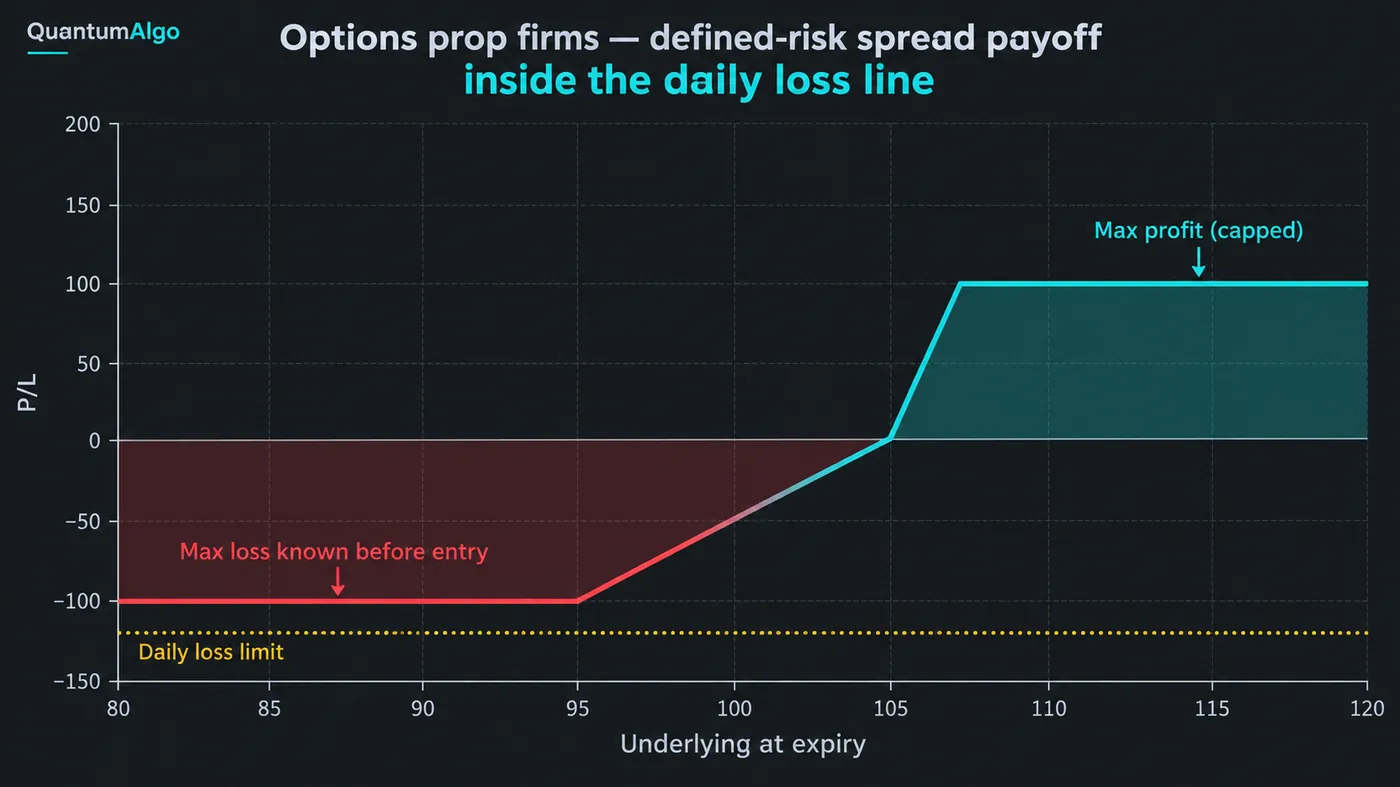
Whatever the firm, the rulebook converges on the same four constraints, because they are the only way the daily-loss and maximum-loss rules can be enforced on an options book. First, defined risk only: vertical spreads, iron condors, debit spreads — positions whose worst case is known at entry. Naked short puts and calls are out, and so, usually, are ratio spreads and anything with undefined risk on one side. Second, buying power is computed on maximum loss, not on the broker's Reg-T margin, so a $5-wide spread consumes $500 per contract minus the credit, full stop. Third, expiry restrictions: many firms bar same-day expiry (0DTE) outright or cap it, because gamma on the last day turns a defined-risk position into something that can move faster than the daily loss check. Fourth, the daily loss is measured on equity including open positions — the same rule that ends most CFD evaluations, and harder to plan around with options because theta and vega move the mark-to-market without the underlying moving at all.
None of this is unfair; it is the futures rulebook translated. A futures firm gives you a floor and a contract limit and lets the market do the rest. An options firm cannot express your risk in contracts, so it expresses it in max loss per spread and in the shape of the position. If your strategy is long premium — buying calls into a breakout — it is compatible with almost every firm, because the max loss is the premium. If your strategy is short premium on undefined risk, no evaluation firm will host it, and the desk-style firms will want to see you do it under their supervision first.

Automate your trades. Let Quantum Algo trade for you.
Every signal executed on your own account — on your account, with the plan you define.
How to choose, in order
- Decide the underlying first. Options on ES and gold futures → a futures prop firm with options permitted, evaluation model, no licence. Single-stock or SPX options → a desk-style firm or Funder Trading.
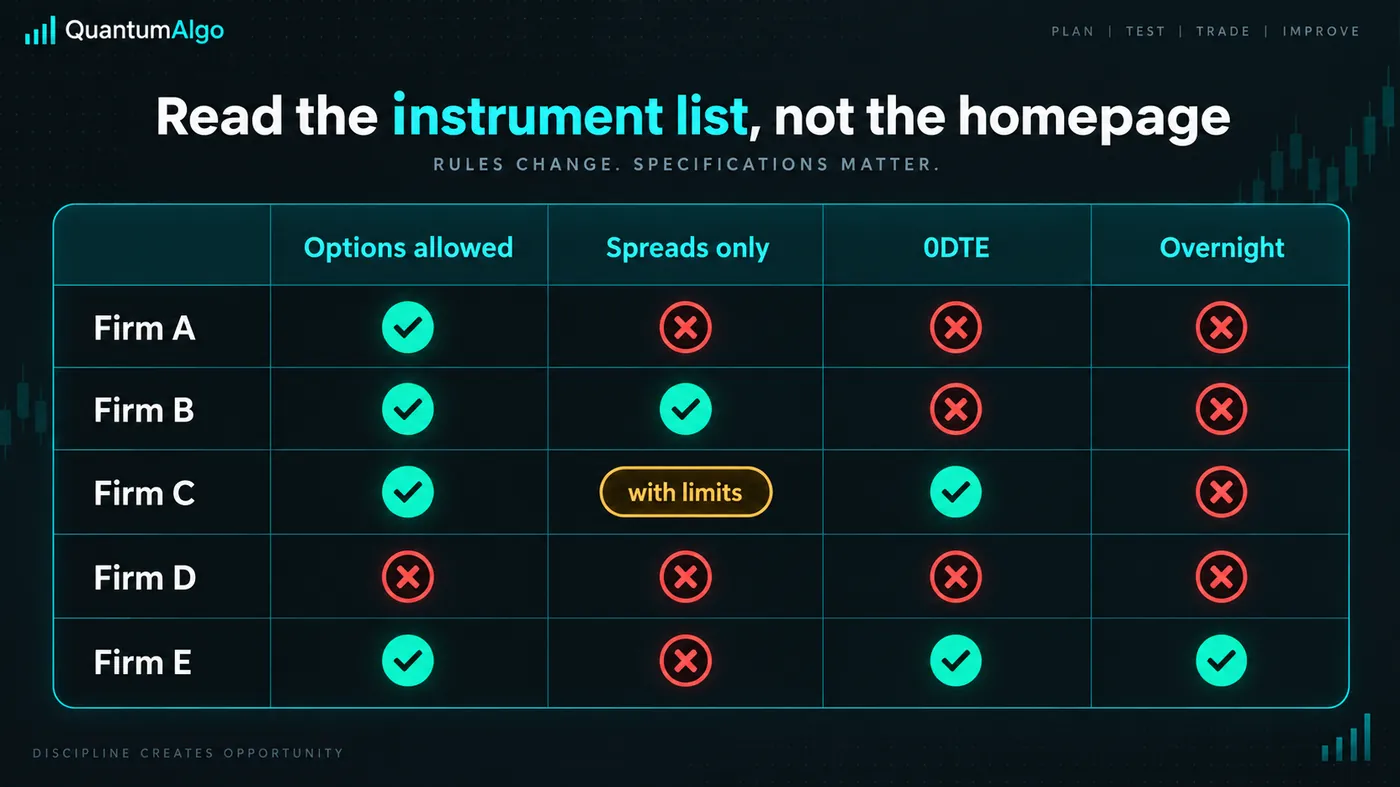
- Read the instrument list and the risk rules, not the homepage. "Options allowed" can mean spreads only, no 0DTE, no overnight, or all three. If your strategy cannot be placed under the rules, the fee is a donation.
- Check who carries the risk. Simulated and paid from the firm (evaluation model) or real capital with licensing and supervision (desk model). Both are legitimate; they are different careers.
- Size to the daily line on max loss. The sizer below does the arithmetic; the firm's risk desk does the same sum, so match it.
- Rehearse the mark-to-market. Run a week of your spreads on a paper account and watch how the equity line moves on days the underlying does nothing. That is the daily-loss exposure you are signing up for.
- Keep the strategy identical from evaluation to funded. Consistency-of-strategy rules exist at most firms; a scalper who passes and then swings is asked to explain.
Spread sizer
Put in the account, the firm's daily loss percentage, the slice of it you are willing to risk on one trade, the spread width and the credit (or debit). The tool returns the maximum loss and gain per contract, the return on risk, the breakeven and — the number the risk desk cares about — how many contracts keep the worst case inside your budget.
What to expect from each route
| Desk-style (real capital) | Evaluation with equity options | Futures firm, options on futures | |
|---|---|---|---|
| Cost to start | Training fees or capital contribution at some desks; exam sponsorship at T3 | Recurring subscription (Funder Trading) — no refund | One-time or monthly evaluation fee, $50–$200/month range |
| Licensing | SIE + Series 57 at broker-dealers | None | None |
| Split | From ~70%, scaling with performance | Firm-specific | 90% at Topstep; firm-specific elsewhere |
| Strategies | Multi-leg allowed under desk risk rules | Defined-risk, restrictions on overnight and multi-leg reported | Options on futures inside the futures rulebook — trailing drawdown, contract limits |
| Platform | Lightspeed, Dash, broker-grade | Proprietary (TrueEdge) | TopstepX, NinjaTrader, Tradovate, Quantower |
| Best for | Someone who wants an options career, not an account | Retail equity options traders who accept the subscription model | SMC traders already on futures who want ES options in the same account |
If you are reading this as a Smart Money trader on futures, the third column is your answer, and the futures platform guide and the MT4 prop-firm guide cover the platform side. If you are an equity options trader, be honest about whether you want a funded account or a job: the desk-style firms are jobs, with the upside and the oversight that implies, and the options basics guide plus the day-trading options guide are the ground you should already own before applying.
Reference data
| Item | Value |
|---|---|
| Why so few | Options break the single-number risk model evaluations rely on: gap risk, buying power that moves with IV and the Greeks, assignment, wide spreads |
| Three models | Desk-style real capital (licensed); evaluation with equity options (rare); options on futures inside a futures evaluation |
| Named desks | Maverick Trading (equity/index options, ~70% split scaling); T3 Trading Group (broker-dealer, SIE + Series 57 sponsored); SMB Capital |
| Named evaluation firm | Funder Trading — stocks and options, subscription model, no refunds, proprietary platform |
| Options on futures | Named as permitted at Topstep and Elite Trader Funding within a futures account — verify the permitted-products list |
| Common rules | Defined-risk spreads only; buying power on max loss; 0DTE barred or capped; daily loss on equity including open positions; no naked short options |
| Ceased | SurgeTrader (2024) |
| Checked | September 2026 — firm pages and current third-party audits; this market changes quarterly |
Worked example: an ES options trade inside a futures evaluation
A $50,000 futures evaluation with a $2,000 daily loss limit and options on futures permitted. The trader's edge is the New York-open sweep of the overnight low on ES, normally taken with one contract and a 10-point stop — $500 risk. On a day when implied volatility is elevated after a data release, he expresses the same view with a bull put spread on ES weekly options instead: sell the 5,400 put, buy the 5,390 put, 10 points wide ($500 per contract for ES options at $50 a point), for a 3.2-point credit ($160). Max loss $340 per spread, max gain $160, return on risk 47%, breakeven 5,396.8.
Sizing: he allows one trade a third of the daily line — $667 — so one spread ($340 worst case) fits and two ($680) do not. One contract. The risk desk sees a position whose worst case is $340 regardless of what ES does overnight, which is the whole reason it is allowed. ES holds the overnight low, drifts up, and the spread is closed the next morning for 0.9 points — $115, or 34% of max loss, 0.34R against the max-loss risk — with the equity line never more than $180 against him intraday. The same view with a naked short 5,400 put would have shown the same profit and would not have been placeable at all.
Mistakes traders make with options prop firms
- Believing the listicles. Half the "options prop firms" on any given list no longer offer options; read the firm's instrument list on the day.
- Sizing on broker margin. The firm sizes on max loss; a spread consumes its full width minus credit.
- Bringing an undefined-risk strategy. Short strangles and naked puts cannot be placed under evaluation rules anywhere.
- Ignoring theta and vega on the daily line. The equity line moves on days the underlying does not; that counts.
- Trading 0DTE where it is barred or capped. Gamma on expiry day is exactly what the rules are written against.
- Confusing a desk job with a funded account. The desk-style firms want licensed, supervised traders; the reward is a career, not a payout button.
- Paying a subscription with no refund for a strategy the platform cannot express. Rehearse on paper first.
Options, prop firms and the free indicators
An options position is still a directional or a volatility view on an underlying, and the underlying is where the free library works. The Smart Money Concepts Engine marks the structure break and the order block that make a short-put strike a defensible level, the Liquidity Sweeps script flags the sweep that starts the move a spread is sold against, and the Volatility Storm Tracker reads the volatility regime that decides whether to buy premium or sell it. The best indicator for options guide covers IV Rank and expected move; the premium engine, Zeno, prints the directional signal with a stop and targets, which is the strike-selection input a defined-risk spread needs.
Choose the underlying first, then the model: options on futures inside a futures evaluation for the SMC futures trader, a desk-style firm for an equity options career, Funder Trading if you want a subscription-funded equity options account and accept its terms. Bring only defined-risk positions, size every spread on its maximum loss against the daily line, respect the expiry rules, and read the instrument list on the day — this market changes quarterly.
◆ Interactive check
Do you know what an options evaluation allows?
Questions traders ask about options prop firms
Yes, but far fewer than lists suggest. Desk-style firms such as Maverick Trading, T3 Trading Group and SMB Capital trade equity and index options with real capital and want trained, often licensed traders. Funder Trading is the widely-cited evaluation-style firm allowing stocks and options, on a subscription. Futures firms such as Topstep and Elite Trader Funding are named as permitting options on futures inside a futures account — always verify the current instrument list.
Because options defeat the single-number risk model evaluations rely on. A short option looks flat until the underlying gaps; buying power moves with implied volatility and the Greeks; positions can be assigned over a weekend; and illiquid strikes have spreads wide enough that simulated and real fills differ. Each is a way for the firm's risk model to be wrong, which is why firms that tried it — SurgeTrader, which closed in 2024 — mostly withdrew.
Defined-risk positions only (verticals, iron condors, debit spreads); buying power computed on maximum loss rather than broker margin; same-day expiry (0DTE) barred or capped; the daily loss measured on equity including open positions, so theta and vega moves count; and usually no naked short options or undefined-risk structures at all.
Topstep is named as permitting CME options on futures within its futures accounts; check the permitted-products list for your account type on the day, because lists change and contract limits apply. Other futures firms differ — Elite Trader Funding is also named, while many futures firms are outright-futures only.
At broker-dealer desks, yes — T3 Trading Group sponsors candidates for the SIE and Series 57 — because you are trading the firm's real capital under FINRA rules. Evaluation and futures-firm routes require no licence because the accounts are simulated and the rewards are paid by the firm.
It is a real firm offering stocks and options on an instant-funding, subscription model with its own platform (TrueEdge), and it is the only widely-cited evaluation-style option for listed equity options. Its terms are different from one-time-fee challenges — recurring cost, a no-refund policy, and reported restrictions on overnight holds and multi-leg strategies — so read them before subscribing.
On maximum loss against the daily loss line. Decide what share of the daily line one trade may risk (a third is a common rule), divide by the spread's max loss per contract (width minus credit, times the multiplier), and round down. Keep the total open max loss under the whole daily line, since theta and vega can move the equity intraday.
Futures, with options on futures as an occasional expression of the same view. The evaluation rulebook was written for futures, the platforms support it, and an ES bull put spread inside a futures account gives you defined risk on a Smart Money level without needing a separate options firm.
Desk-style firms typically start around 70% and scale with performance; Funder Trading's split is set by its subscription tier; futures firms pay their normal futures split — 90% at Topstep — on options-on-futures profits as part of the account.
The library works on the underlying: the Smart Money Concepts Engine marks the structure and order blocks that make a strike defensible, the Liquidity Sweeps script flags the sweep that starts the move, and the Volatility Storm Tracker reads the regime that decides whether to buy or sell premium. Zeno, the premium engine, prints directional signals with a stop and targets — the strike-selection input a spread needs.
References & Related Guides
Read next
- What Is a Prop Firm?
- Options Trading for Beginners
- Day Trading Options
- Best Indicator for Options Trading
- Topstep Review
- Apex Trader Funding Review
- Prop Firm Trading Strategy
- Best Futures Trading Platform
- Position Sizing
- Volatility Storm Tracker (free indicator)
- Expected Move — glossary
- Zeno — the premium engine
Primary sources
- Atlas Funded: Best options trading prop firms — the named desks, Funder Trading and options on futures (updated September 2026)
- Elite Trader Funding: Options trading prop firms, the reality check — why options break the evaluation model
- T3 Trading Group — broker-dealer, SIE and Series 57 sponsorship
- CME Group: Options on futures — E-mini S&P 500 options contract specifications