Crypto Prop Firms: How They Work, the Firms, the Rules and How to Choose

Crypto prop firms sell evaluations: reach a profit target (typically 5%–12%) without breaching a daily loss limit (3%–5%) or a maximum drawdown (3%–10%), then trade a usually simulated funded account and keep 80%–90% of the profits, paid in USDT or USDC. Crypto-native firms include HyroTrader, Crypto Fund Trader, Breakout (Kraken) and BitFunded. Choose on the drawdown type, the daily reset, the platform and the payout record — not the account size.
Crypto prop firms promise funded accounts of $100,000 and more for the price of a challenge fee. The promise is real in the sense that traders are paid, but the details decide everything: whether the drawdown is static or trailing, when the 24/7 day resets, whether orders reach a real exchange order book and how payouts actually work. This guide explains the model, compares the crypto-specialised firms on their published rules, shows why the drawdown rule ends more accounts than any other, and gives a checker for your own numbers.
Indicators that prove themselves in public.
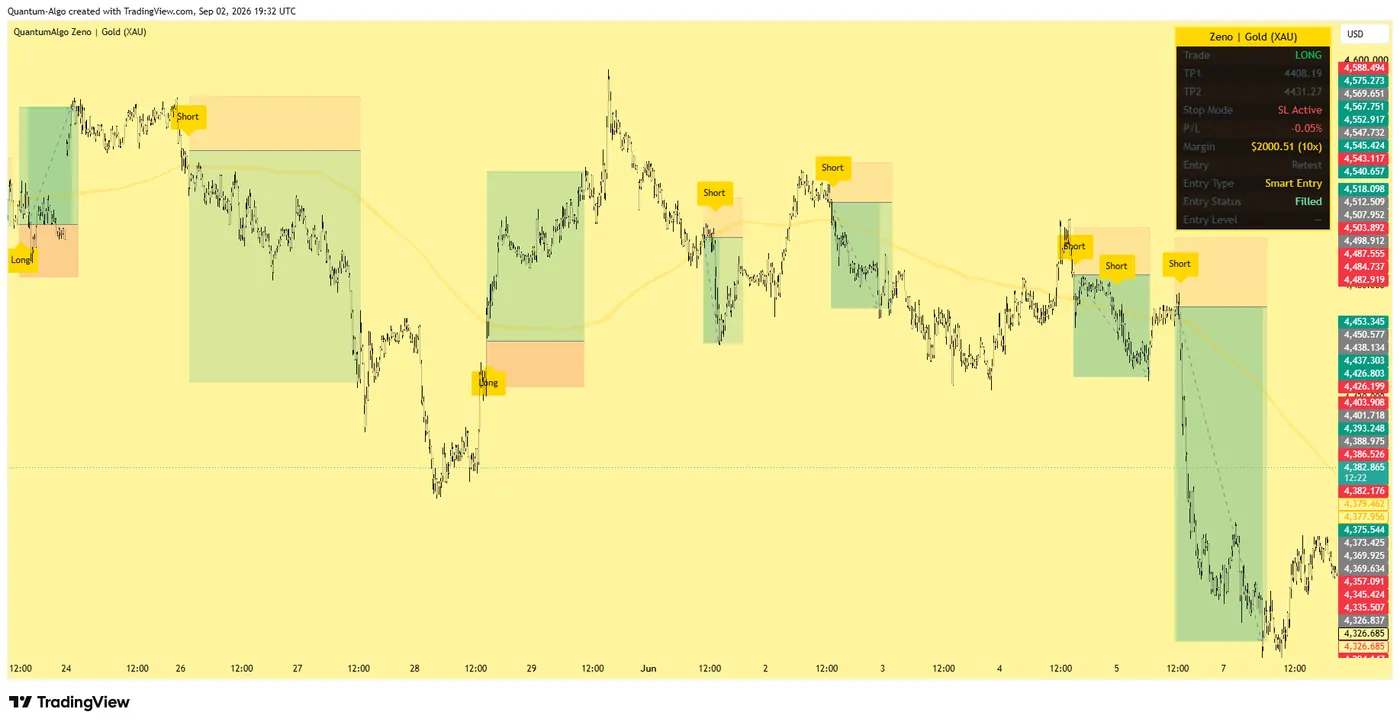
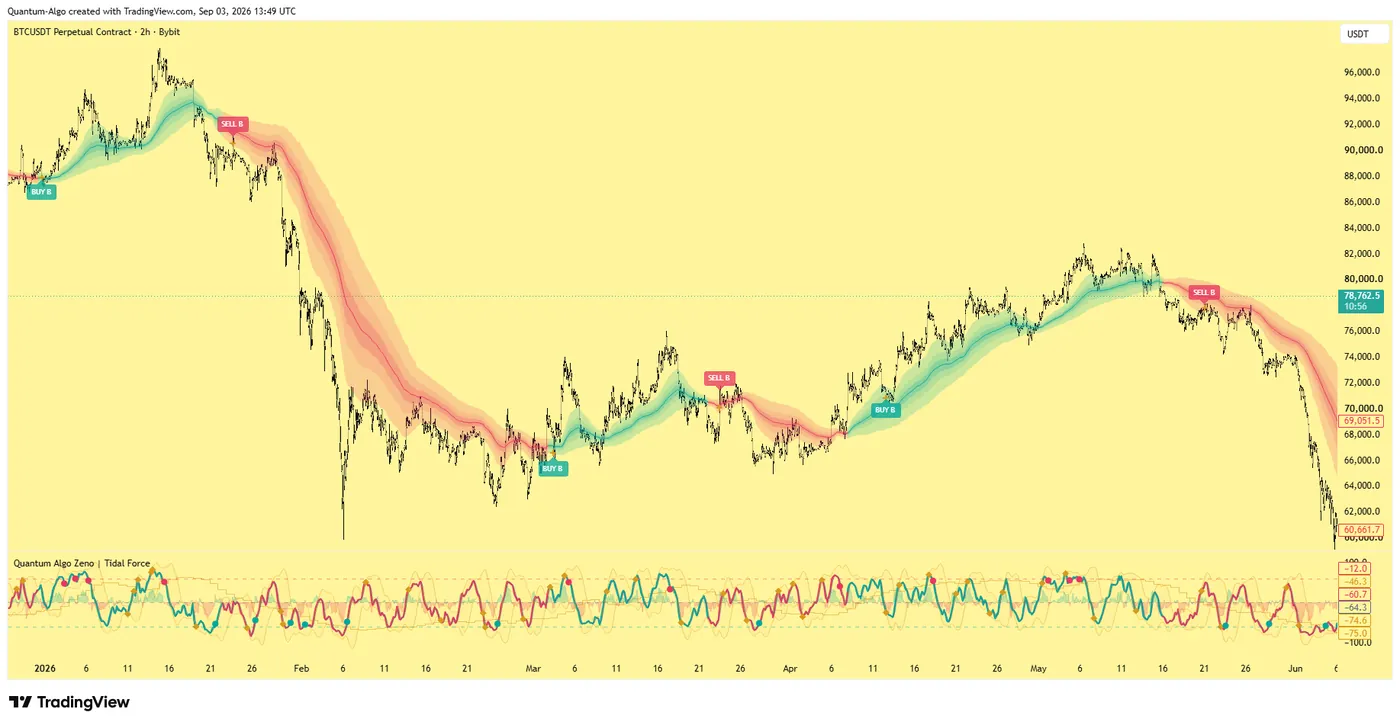
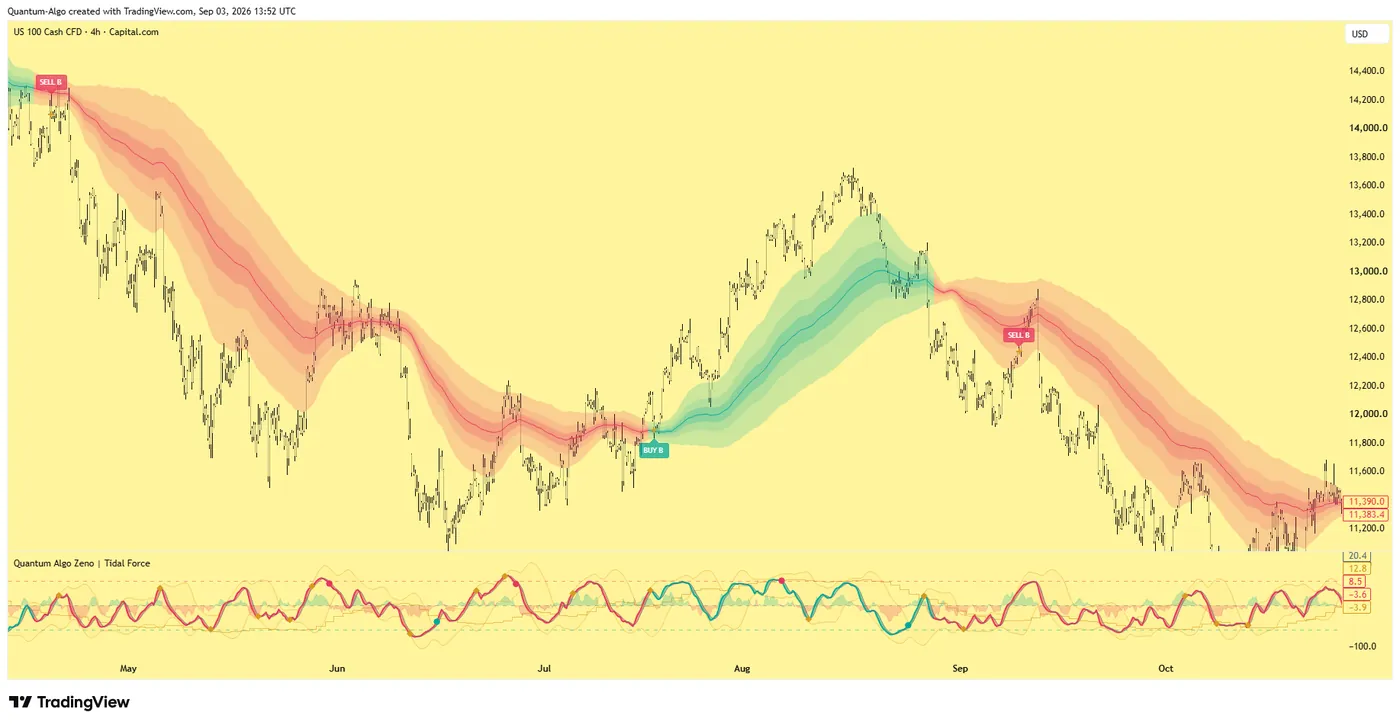
One engine, four precision tools — the Gold (XAU) Scalper, the institutional Gravity Zone, the Zeno momentum Oscillator, and Zeno Stocks for equities.
What is a crypto prop firm?
A crypto prop firm — short for proprietary trading firm — sells evaluations that test whether a trader can grow an account under strict loss limits, and pays successful traders a share of the profits they make on a funded account. Crypto prop firms specialise in digital assets: the programs run around the clock, the instruments are Bitcoin, Ether and altcoin perpetuals, leverage and rules are built for crypto volatility, and payouts are typically made in stablecoins such as USDT or USDC.
Two facts frame everything else. First, the funded accounts are almost always simulated: the firms say so in their own terms — HyroTrader describes payouts as a contractual share of simulated trading performance, FTMO calls its capital fictitious and Kraken describes its prop product as an unregulated service. You are paid from the firm's revenue, not from a share of real market profit. Second, the business is unregulated in most places, which is why rules, payouts and the firms themselves can change quickly. Choose on rules, payout record and the platform — not on the headline account size. The what is a prop firm guide covers the model in general.
How do crypto prop challenges work?
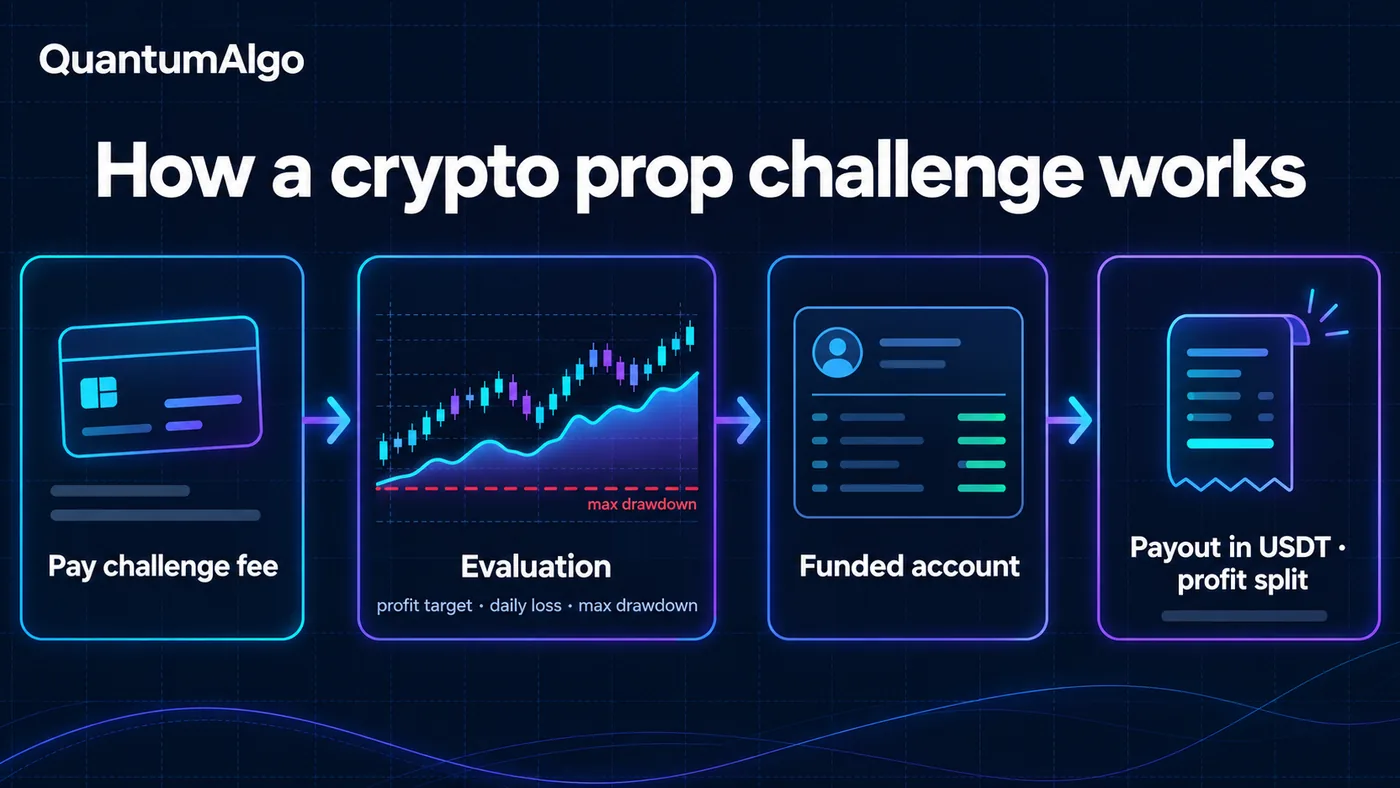
- Pay the challenge fee. Fees scale with account size — from about $20 for small accounts on some programs to several hundred dollars for $100,000 and above.
- Pass the evaluation. Reach a profit target — typically 5% to 12% — without breaching the daily loss limit or the maximum drawdown. One-step programs have one target; two-step programs have two phases, the second with a lower target.
- Get funded. A funded (usually simulated) account with the same or similar loss limits and no profit target.
- Request payouts. Profits are split, commonly 80% to the trader rising to 90%, and paid in USDT or USDC — some firms also pay by bank transfer.
- Scale. Many programs raise the account size after consistent payouts, up to a per-trader cap.
Unlike futures prop firms, crypto programs trade 24/7, so when the day resets matters: firms measure the daily loss limit from the balance or equity at a fixed UTC time. Breakout, for example, measures it from the balance at 00:30 UTC. Read the definition before your first trade — a loss taken late in your evening can count against the next day's limit or the current one depending on the reset.
Which crypto prop firms are there?
| Firm | Evaluations | Max daily loss | Max drawdown | Crypto leverage | Split | Platform |
|---|---|---|---|---|---|---|
| HyroTrader | Zero-Step, One-Step, Two-Step | 3% / 4% / 5% | 5% / 6% / 10% | Up to 100× (Bybit), 150× (BloFin) | 80% → 90% | Bybit or BloFin via API, own platform |
| Crypto Fund Trader | 1-Phase, 2-Phase, Break and others | 4% (1-Phase), 5% (2-Phase), none (Break) | 6% trailing (1-Phase), 10% fixed (2-Phase) | Up to 1:100 | 80% (90% add-on) | MT5, Match-Trader |
| Breakout (Kraken) | 1-Step (Classic, Pro, Turbo), 2-Step | 3%–5% | 1-Step static 3%–6%; 2-Step 8% trailing | 5× BTC/ETH, 2× others | 80% (90% add-on) | DXtrade, Breakout Terminal |
| BitFunded | 2-Step, 1-Step, 1-Step Express, Instant | 3%–5% | 3%–10% | Up to 5× | 80% (Instant 60%) | Own platform and app |
The table lists crypto-specialised firms whose rules we could confirm on their own program pages; rules change often, so check the firm's current page before buying. HyroTrader connects to real exchange order books on Bybit or BloFin through an API, which gives exchange-grade execution and charting, while stating that trading is simulated on real market data; it pays in USDT or USDC with a minimum of $100, and limits coins under $100 million market cap to a small share of the account. Crypto Fund Trader runs the widest program menu on MetaTrader 5 and Match-Trader, allows weekend holding and news trading and pays by bank transfer or crypto. Breakout was acquired by Kraken in September 2025; Kraken now runs prop programs inside its own apps and terminal alongside the standalone Breakout platform, with one-step evaluations from $20 and USDC payouts. BitFunded trades on its own platform and pays in USDT across several chains.
Several multi-asset prop firms also list crypto, usually as CFDs with much lower leverage: FTMO offers crypto CFDs on its MetaTrader and cTrader accounts, FundingPips lists crypto at low leverage and closes Zero Master accounts held over the weekend, and futures firms such as Apex Trader Funding only offer crypto through CME micro Bitcoin and Ether futures. Those are fine for traders who mainly trade forex or futures; traders who want crypto perpetuals, 24/7 trading and exchange charts are better served by a crypto-native program.

Automate your trades. Let Quantum Algo trade for you.
Every signal executed on your own account — on your account, with the plan you define.
Static vs trailing drawdown: the rule that decides most crypto challenges
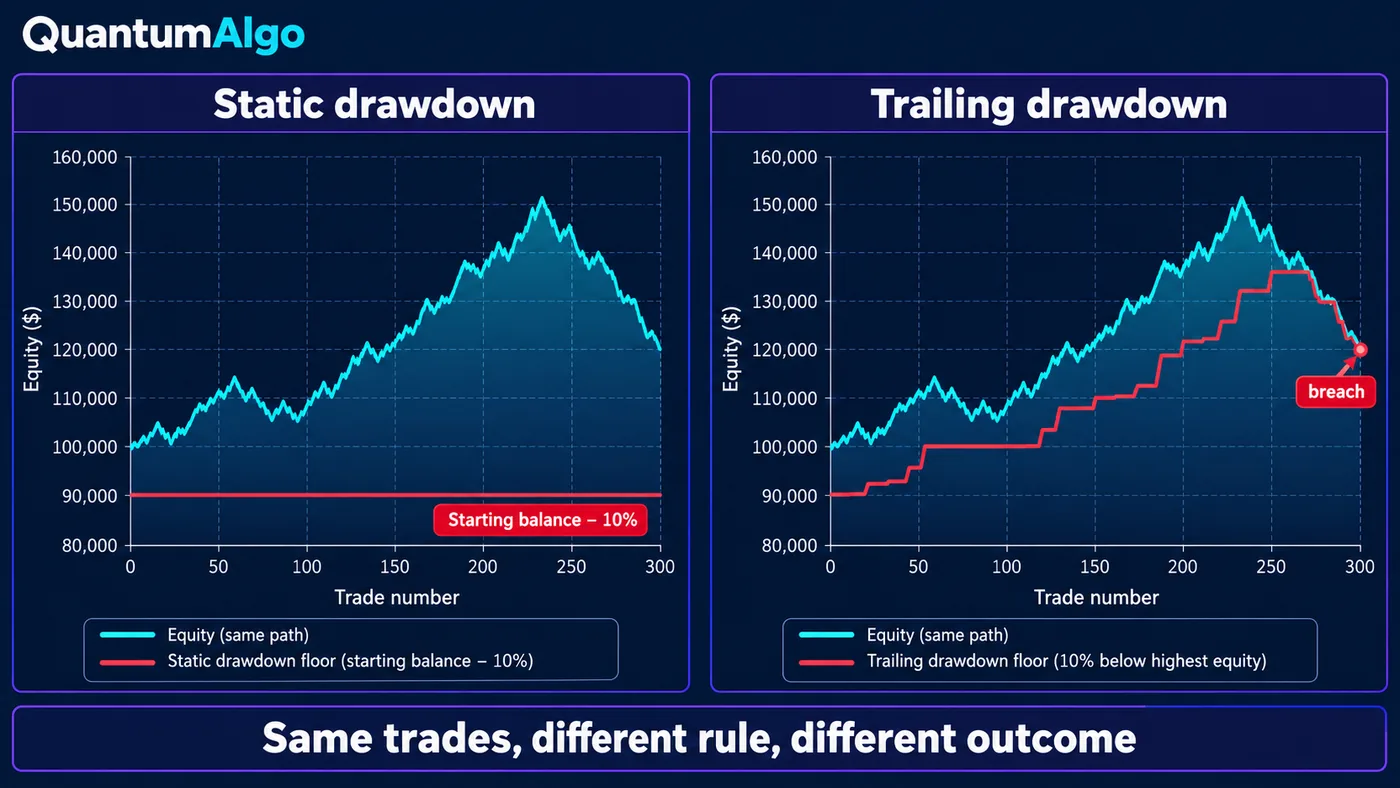
A static drawdown sets a fixed floor — for example the starting balance minus 6%. Profit you make widens the buffer between your equity and the floor. A trailing drawdown sets the floor a fixed distance below your highest balance or equity and moves it up as you make new highs. Profit you make does not widen the buffer; the buffer stays the same size and follows you.
In crypto this difference is decisive. A 10% intraday move in an altcoin is ordinary, and a winning position that gives back half its open profit can drag equity down to a trailing floor that rose with the unrealised high. Two practical consequences: under a trailing rule, size down after a new equity high rather than up; and check whether the trailing floor follows closed balance or open equity — equity-based trailing is the stricter of the two. The rule checker below shows how many losses in a row each rule allows.
What rules end crypto prop accounts?
| Rule | What it says | Why it catches people |
|---|---|---|
| Daily loss limit | A % of the day's starting balance or equity | 24/7 markets and a UTC reset make "the day" easy to misjudge |
| Max / trailing drawdown | A floor below the start or below the high | Volatile pullbacks from open profit reach a trailing floor |
| Leverage caps | From 2× on altcoins to 100× on majors | High leverage with a 3%–5% daily limit leaves no room for normal noise |
| Coin restrictions | Small-cap coins limited or excluded | A large position in a thin coin can breach a size rule |
| Consistency rules | No single day can be too large a share of profit | One big winning day can block a payout |
| Payout minimums and caps | Minimum withdrawal, cap per request | Profit can sit unpaid until thresholds are met |
| Country and platform restrictions | Some regions or platforms excluded | US residents are excluded from some platforms on several firms |
How do you choose a crypto prop firm?
- Start with the drawdown type. Static is easier to survive in crypto than trailing; equity-based trailing is the hardest.
- Check the daily reset and how the daily loss is measured. Balance-based or equity-based, and at what UTC time.
- Check the platform. Exchange-connected programs (orders routed to Bybit or BloFin order books) feel like trading on an exchange; MetaTrader and DXtrade programs use the firm's price feed.
- Check payouts, not just the split. Currency, minimum, cap per request, frequency and the firm's public payout record.
- Check leverage and coin lists. High leverage is not an advantage under a tight daily limit.
- Check eligibility. Your country, KYC requirements and whether your region can use the platform.
- Size for the rule, not the account. Risk per trade should allow a run of losses — the checker below shows how many.
Prop rule checker
Enter the account size, the daily loss limit, the maximum drawdown and whether it is static or trailing, plus your risk per trade and the highest profit you have reached. The checker shows how many losses in a row end the day and the account, and where the floor sits — and how a trailing floor eats the buffer that profit would otherwise give you.
Reference data
| Item | Value |
|---|---|
| Typical profit target | 5%–12% (one-step); about 8% then 5% (two-step) |
| Typical daily loss limit | 3%–5% |
| Typical maximum drawdown | 3%–10%, static or trailing |
| Typical profit split | 80%, rising to 90% |
| Payout currencies | USDT, USDC; some firms bank transfer |
| Kraken acquisition of Breakout | Completed September 2025 |
| Kraken Prop launch | May 2026, one-step evaluations from $20 |
| HyroTrader exchanges | Bybit, BloFin (via API) |
| Regulation | Prop programs are generally unregulated (Kraken states this for its own) |
| My Forex Funds v CFTC | Dismissed with prejudice in May 2025; court sanctioned the CFTC |
Worked example: the same trades under two drawdown rules
A trader buys a $50,000 one-step crypto challenge with a 4% daily loss limit and a 6% maximum drawdown, and risks 0.5% ($250) per trade. On a static rule the floor is $47,000. After a good week the account peaks at $51,500 (+3%), so the buffer to the floor is $4,500 — eighteen losing trades in a row.
On a trailing rule the floor follows the peak: $51,500 − $3,000 = $48,500. The buffer is still $3,000 — twelve losses — and it does not grow with profit. Now add crypto volatility: an open ETH position that reached +$1,200 and gave it back while the floor trailed open equity would have lifted the floor to $49,700 on an equity-based rule, leaving $1,800 of room — seven losses. Same trader, same trades, a third of the room. That is why the drawdown type matters more than the account size, and why the checker asks for your peak profit.
What mistakes do traders make with crypto prop firms?
- Buying the biggest account. The loss limits scale with it; the rules are what decide the outcome.
- Using maximum leverage. 100× on a 4% daily limit means a 0.04% move ends the day at full size.
- Ignoring the UTC reset. A loss after midnight UTC belongs to a new day — or does not, depending on the firm.
- Holding through funding and weekends without checking the rules. Funding payments and weekend gaps count against equity on many programs.
- Trading illiquid coins. Slippage and coin restrictions catch traders on small caps.
- Assuming the firm will be there. The industry is young and unregulated; withdraw profits when eligible and avoid prepaying multiple challenges.
- Treating simulated funding as real capital. Payouts depend on the firm's business, not on market access.
Which tools help pass a crypto prop challenge?
The traders who pass crypto challenges usually trade fewer, higher-quality setups with fixed risk and leave volatile intraday noise alone. Structure and liquidity are the core skills: knowing where stops cluster above and below ranges, waiting for a sweep and a shift in structure rather than chasing breakouts, and sizing so a normal run of losses stays inside the daily limit. The prop firm trading strategy and day trading crypto guides cover the approach; funding rates matter when holding perpetuals.
On TradingView — which most exchange-connected programs let you use for charting — the free Quantum Algo indicators mark liquidity, structure and key levels, and Zeno, the premium engine, prints its own buy and sell signals with an entry, a stop and two targets, so every trade has a defined risk before you place it. The prop firms that use TradingView guide lists which firms support it, and the public track record lists every call.
Crypto prop firms are evaluation businesses: a fee buys a test, passing buys a usually simulated funded account, and profits are paid as an 80%–90% split in stablecoins. The rules decide the outcome — above all whether the drawdown is static or trailing and how the 24/7 day resets. Pick a firm on rules, platform and payout record, size so a run of losses fits inside the daily limit, and withdraw when you can.
◆ Interactive check
Do you know how crypto prop firms work?
Questions traders ask about crypto prop firms
A firm that sells evaluations in which traders must reach a profit target without breaching loss limits on crypto markets, then pays a share of the profits — usually 80% to 90% — made on a funded, usually simulated account, typically in USDT or USDC.
Some pay traders consistently, but the industry is largely unregulated and accounts are simulated. Check the rules on the firm's own pages, its public payout record, its platform and ownership, and withdraw profits when eligible.
It depends on the rules you trade best under. Crypto-native firms include HyroTrader (exchange-connected via Bybit and BloFin), Crypto Fund Trader (MT5 and Match-Trader), Breakout, owned by Kraken, and BitFunded. Compare drawdown type, daily reset, leverage, payouts and eligibility.
Most funded accounts are simulated. HyroTrader describes payouts as a share of simulated performance, FTMO calls its capital fictitious and Kraken describes its prop product as unregulated.
A static drawdown has a fixed floor below the starting balance, so profit widens your buffer. A trailing drawdown keeps the floor a fixed distance below your highest balance or equity, so the buffer never grows. Trailing is much harder in volatile crypto markets.
Usually in stablecoins such as USDT or USDC, sometimes by bank transfer, with minimums, caps per request and a profit split of 80% to 90%.
Some programs accept US residents and some exclude them or restrict certain platforms. Check the firm's country list before buying.
From about 2× on altcoins to 100× or more on majors on exchange-connected programs. High leverage is rarely useful under a 3% to 5% daily loss limit.
Risk a small fixed percentage per trade, size so a run of losses fits inside the daily limit, prefer static drawdown programs, avoid illiquid coins and trade structured setups with a defined stop.
Many crypto prop traders chart on TradingView and execute on the firm's platform; some programs connect to exchanges that integrate with it. Check the firm's platform list.
References & Related Guides
Read next
- What Is a Prop Firm?
- Prop Firm Trading Strategy
- Cheapest Prop Firms
- Prop Firms That Use TradingView
- FTMO Review
- FundingPips Review
- Prop Firms for US Traders
- Day Trading Crypto
- Funding Rate Trading
- Best Crypto Indicator
- Free TradingView indicators
- Zeno — the premium engine