What Is a Trading Bot? Types, How They Work, Why Most Fail, and the Design That Survives
A trading bot is software that places and manages orders on your exchange or broker account automatically, according to rules — either rules you configure or rules someone sold you. It has no edge of its own; it executes one, or the absence of one, faster and more consistently than a human. That explains why good bots make disciplined traders better, why bad ones lose at machine speed, and why "AI trading bot" is mostly a marketing label for rule-based software with a language model attached. The design that keeps your money safest is a signal-execution bot on your own account with a risk layer — which is what QuantumBot is.
This is the definition the other bot pages on this site assume: the four kinds of bot and how each dies, what actually sits inside an "AI" bot, the anatomy of the one design that puts your money at the least risk, and the honest case for QuantumBot — what it does, what it does not, and why the gap between a manual trader and a bot is execution rather than signals. The picker below tells you which type fits your market and goal; the simulator shows what each would have done on a sample day.
Indicators that prove themselves in public.
One engine, four precision tools — the Gold (XAU) Scalper, the institutional Gravity Zone, the Zeno momentum Oscillator, and Zeno Stocks for equities.
What is a trading bot?
A trading bot is software that places and manages orders on your exchange or broker account automatically, according to rules — either rules you configure (grid spacing, DCA intervals, an indicator's signals) or rules someone else wrote and sold you. The bot does not have an edge of its own; it executes an edge, or the absence of one, faster and more consistently than a human can. That single fact explains almost everything about trading bots: why the good ones make disciplined traders better, why the bad ones lose money at machine speed, and why "AI trading bot" is mostly a marketing phrase for rule-based software with a language model bolted on.
This page is the definition the other bot pages on this site assume: the four kinds of bot and how each one dies, what actually sits inside an "AI" bot, the anatomy of the one design that puts your money at the least risk — a signal-execution bot on your own account — and the honest case for QuantumBot, which is that design, built to execute Zeno's signals on crypto, forex and gold with a risk engine between every signal and every order. The picker below tells you which type fits your market and goal, and the mini-simulator shows what each would have done on a sample day.
The four kinds of trading bot
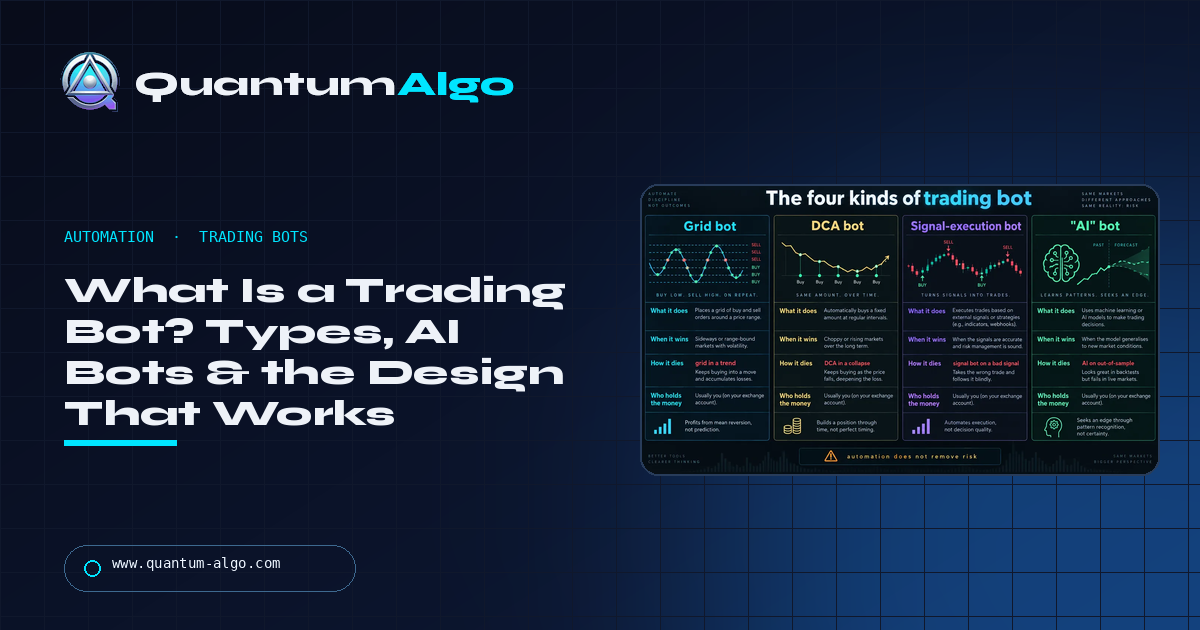
The four-column illustration in this guide separates the types most "best trading bot" lists blur together:
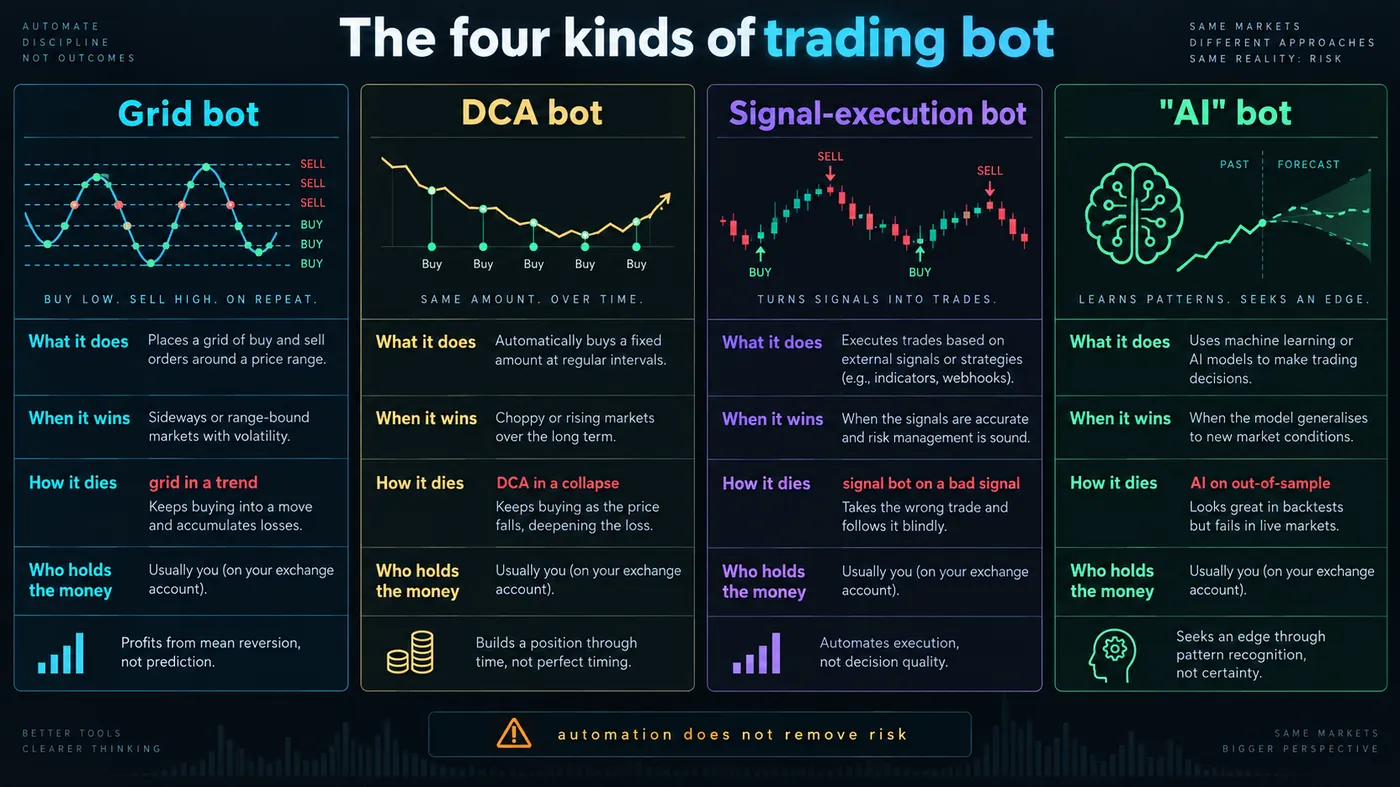
Grid bots place a ladder of buy and sell orders at fixed intervals above and below the current price and profit from oscillation inside a range. They win in sideways markets and die in trends: a strong move up leaves the bot short of inventory and full of unfilled sells, a strong move down fills every buy on the way to the floor. The exchange usually holds the money (grid bots are exchange-native features on Bybit, Binance, OKX and others).
DCA bots buy fixed amounts at fixed intervals or on fixed dips, lowering the average entry. They win in markets that eventually recover and die in ones that do not — a DCA bot on an altcoin that loses 90% is a machine for buying more of it all the way down. Exchange-native or third-party (3Commas-class), the exchange holds the money.
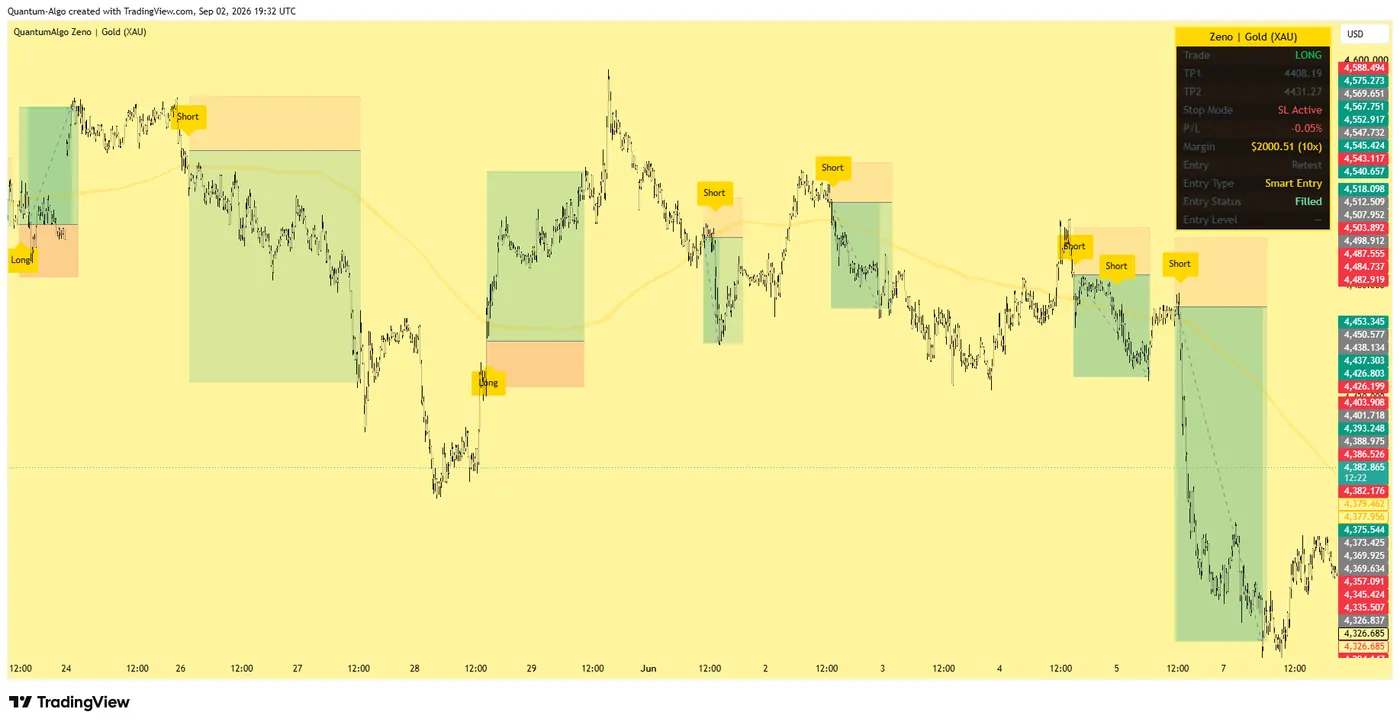
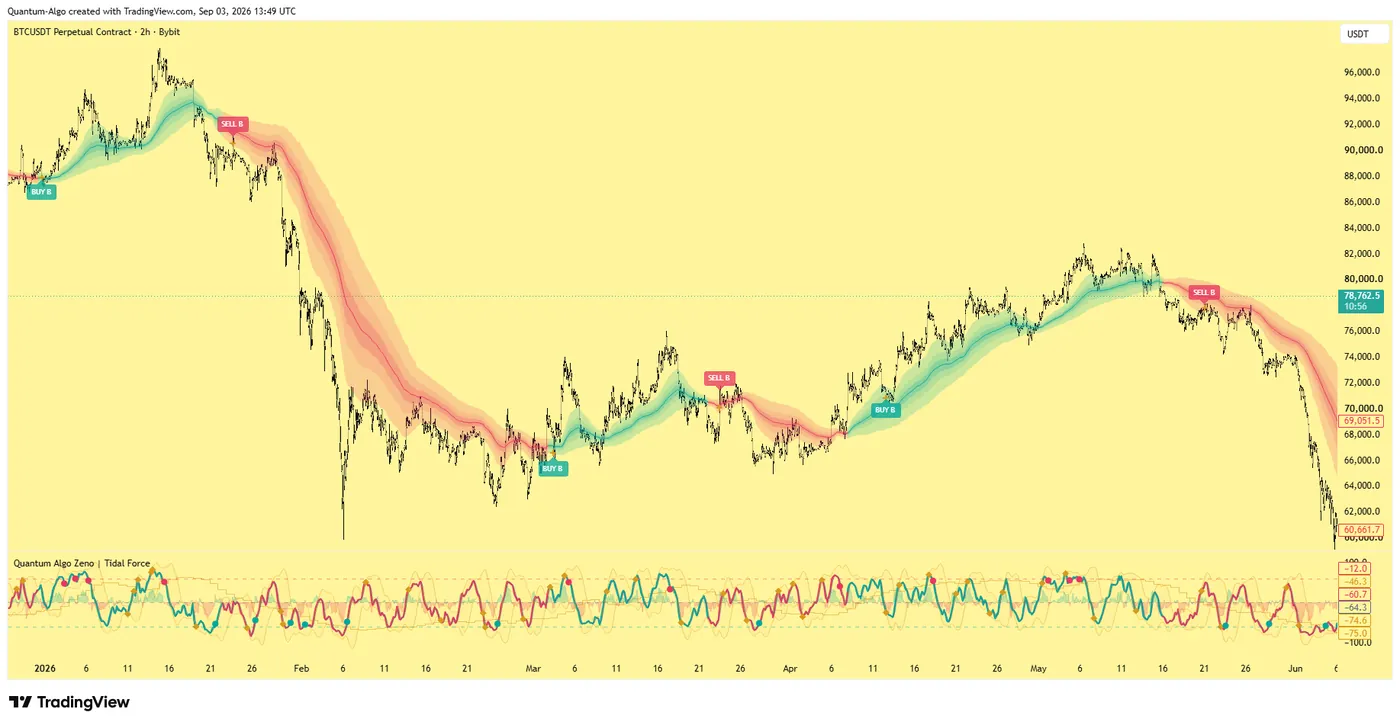
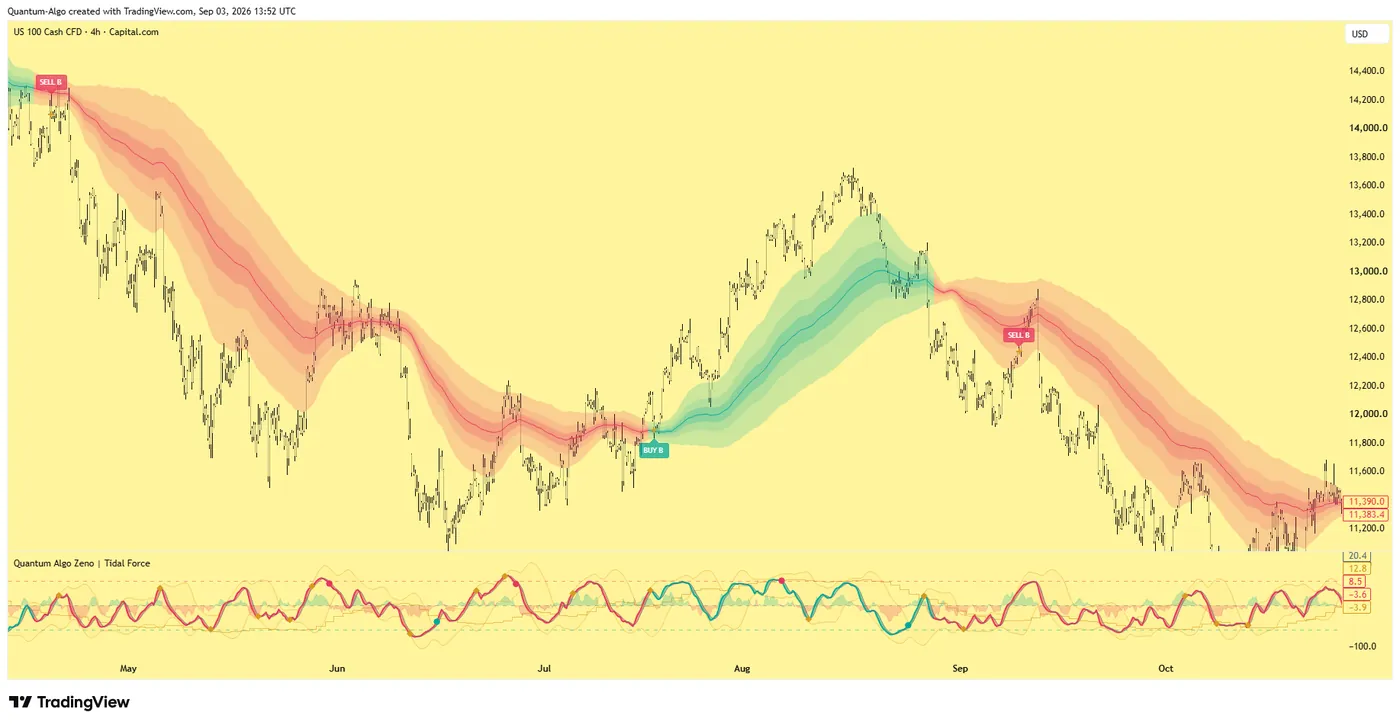
Signal-execution bots wait for an external signal — an indicator alert, a webhook, a Telegram feed — and place the trade it describes: entry, stop, targets. They win exactly as often as the signals do, and they die when the signal source is bad, when the bot is a bare order relay with no risk layer, or when the connection between the two breaks. The money stays on your own exchange account under an API key; the bot has trading rights, not withdrawal rights, if it is built properly.
"AI" bots claim to predict price from data. Most are one of the three above with a language-model chat wrapper; the honest ones are machine-learning classifiers that found a pattern in past data. They win when the pattern persists and die when the market regime changes — which, for price data, is the normal condition. Who holds the money varies, and that variation is the first thing to check.
What "AI trading bot" usually means
The stacked-bar illustration in this guide is our honest estimate of what is inside the typical product sold under that name: around 60% rule-based logic that a 2015 bot could run, 20% a language-model wrapper that explains the rules back to you in confident prose, and 20% marketing. The footnote is the part worth remembering. Machine learning can find patterns in historical data, classify regimes, and optimise parameters on the past. It cannot predict the future from price alone, cannot guarantee returns, and cannot know when the regime it learned has ended — the one thing a trader most needs to know.
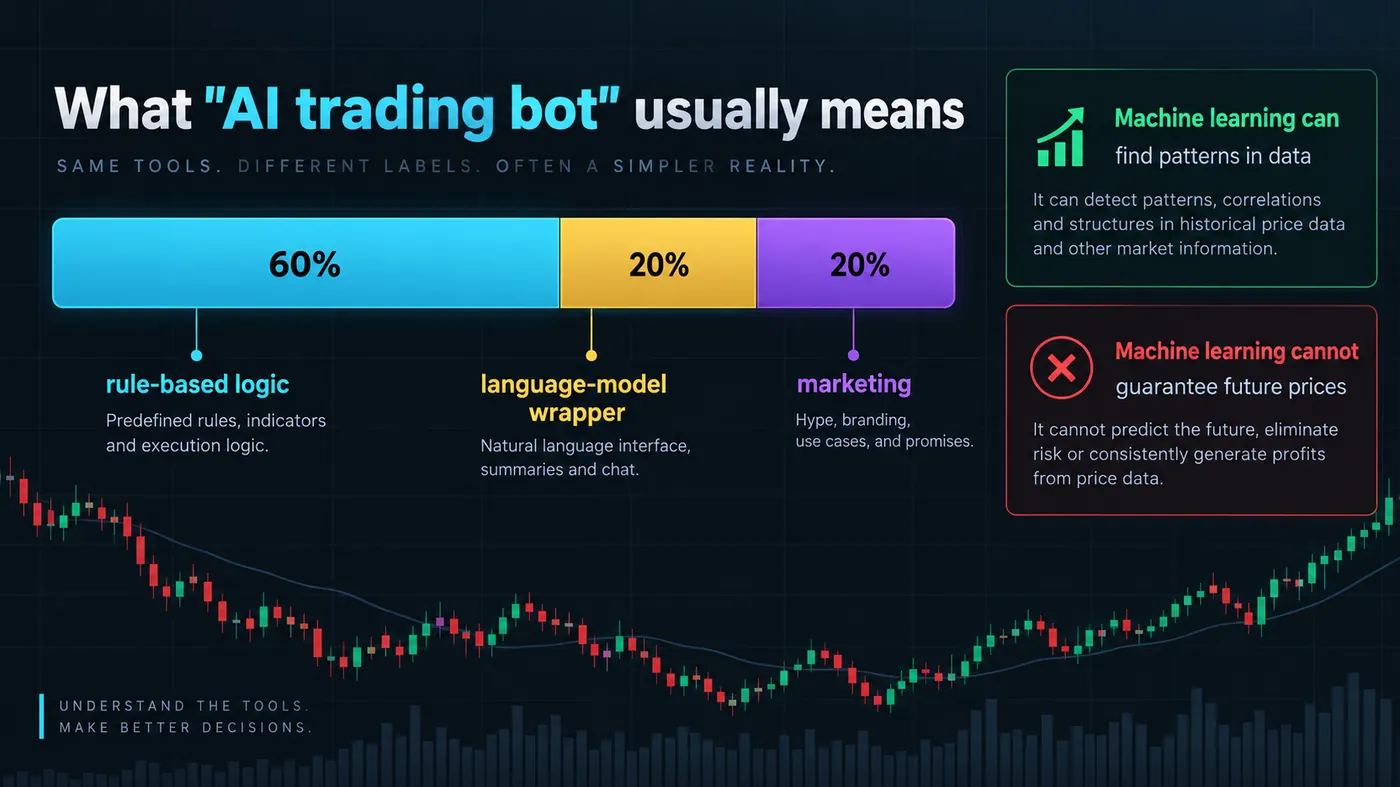
So "best AI trading bot" is the wrong question. The right ones are: what rules does it actually trade, has anyone shown them working out of sample, who holds the money, and what happens when the rules are wrong. Our can-AI-predict-the-stock-market guide covers the evidence; our ChatGPT-for-trading guide covers what language models are genuinely useful for, which is not placing trades.
Anatomy of a signal-execution bot
The flow diagram in this guide is the design that keeps your money safest, and the one QuantumBot implements:
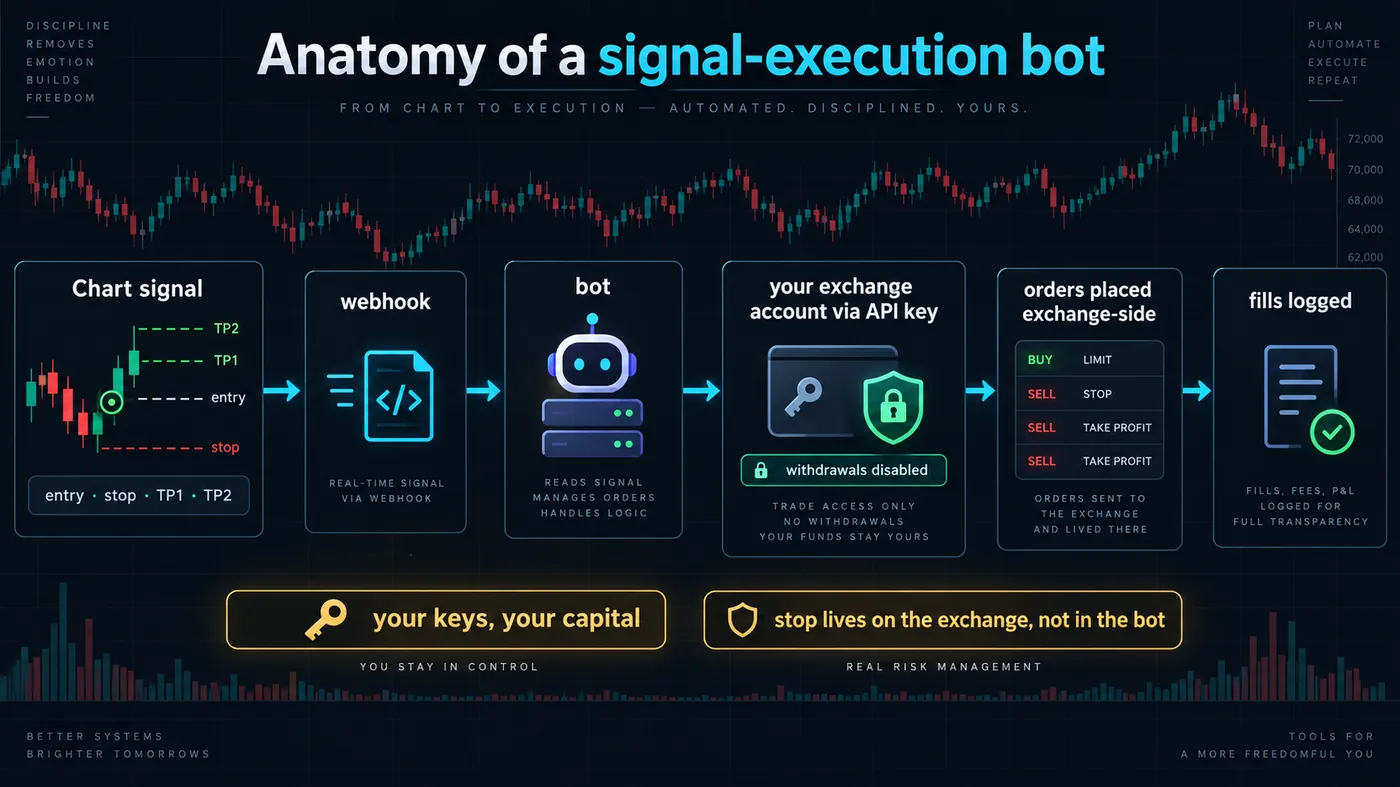
- A chart signal with entry, stop, TP1 and TP2 — on TradingView, printed by an indicator whose logic you can see on your own chart.
- A webhook — the alert sends a message to the bot's server the moment the signal fires.
- The bot — receives the message, checks it against the risk rules, sizes the position.
- Your exchange account via API key — the bot places the order on Bybit, Binance, OKX, Bitget or Kraken using a key with trading permission only. Withdrawals are disabled at the exchange; the bot cannot move funds anywhere.
- Orders rest exchange-side — the stop-loss and take-profits are placed on the exchange itself, so they execute even if the bot or the connection goes down.
- Fills are logged — every order, every fill, every management step in a dashboard and to Telegram or Discord.
The two callouts on the diagram are the two things that separate a bot from a risk: your keys, your capital — the bot never holds money — and the stop lives on the exchange, not in the bot.

Automate your trades. Let Quantum Algo trade for you.
Every signal executed on your own account — on your account, with the plan you define.
Why most bots lose: the missing risk layer
The failure that kills most signal bots is not a bad signal; it is that the bot is an order relay. It takes whatever comes in and fires it: ten signals in an hour, ten positions; a losing streak, full size on every one; a signal on a symbol already held, doubled exposure. The signals could be excellent and the account is gone in a week.
The risk layer is what distinguishes a bot from a relay, and it is the part to interrogate before anything else. QuantumBot's version — the reason we built it rather than pointing subscribers at a generic webhook tool — checks every signal against a maximum number of open positions, directional limits, an account heat cap (total open risk as a percentage of the account, with a default ceiling), a daily, weekly and monthly drawdown gate that pauses trading when hit, a loss cooldown, and a kill switch. Only a signal that clears every gate is sized and sent. A bot without that list is a relay with a dashboard.
The case for QuantumBot, honestly
QuantumBot exists because Zeno's signals are only worth what the execution makes of them, and the month-with-and-without illustration in this guide shows the gap: the same month of signals, one equity curve from a manual trader who missed 30% of the entries, moved two stops and skipped the 3 am setups, and one from the bot that took every signal at fixed risk. The gap is annotated "execution, not signals", because that is what it is.
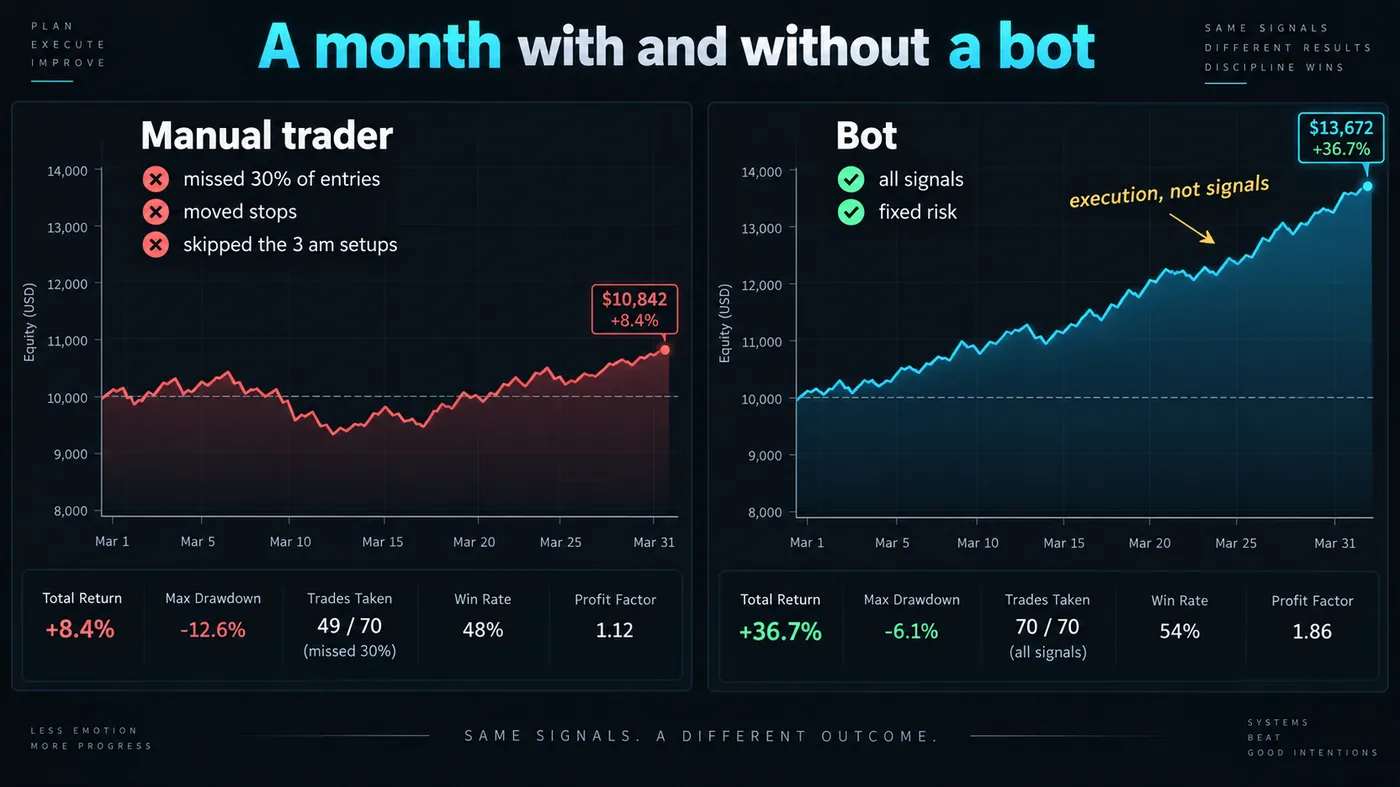
What it does, specifically:
- Executes Zeno signals — entry, stop-loss, TP1 partial close, breakeven shift, trailing stop — on Bybit, Binance, OKX, Bitget and Kraken, across 400+ crypto pairs, plus forex, gold, stocks and indices where the exchange lists them.
- Runs the risk engine above between every signal and every order.
- Rests stops and targets on the exchange, not in the bot.
- Uses trade-only, IP-restricted API keys with no withdrawal permission, encrypted at rest; the webhook is authenticated with a secret token.
- Reports everything — dashboard, Telegram and Discord — and the same signals are visible on your own TradingView chart, so there is no black box between the bot and your account.
- Costs $199 a month at the founding price ($399 list), which includes the full Zeno Signals suite.
What it does not do, also specifically: it does not predict anything, it does not hold your funds, it does not remove risk — a losing streak in the signals is a losing streak in the account, sized and stopped but real — and it does not run on a broker that has no API, which is why forex and gold execution is through exchanges that list them rather than through an MT5 broker. The public record of the signals it executes is on the track-record page: 160 posted trades, 120 wins, 40 losses at the stated levels.
Forex and gold: what "bot" means outside crypto
Crypto exchanges have open APIs, so a signal-execution bot is a natural fit. Forex and gold at a CFD broker are different: most brokers expose MetaTrader's Expert Advisor environment rather than a REST API, and cTrader has its own automation. Three honest routes exist. A TradingView-integrated broker lets the Trading Panel place the bracket from the chart but does not automate it. An MT5 Expert Advisor can be built from the same rules and runs on the broker's platform. And exchanges that list gold and forex perpetuals — several of the five QuantumBot supports — allow the crypto-style bot to trade those markets directly, with the exchange's counterparty risk in exchange. QuantumBot takes the third route; our forex-brokers guide explains the trade-offs of each.
How to choose a trading bot
- Start from the strategy, not the bot. If you cannot state the rules, no bot can trade them well. Our algorithmic trading guide is the place to write them.
- Match the type to the market regime and your goal. Grid for ranges, DCA for long-horizon accumulation of things you would hold anyway, signal-execution for a discretionary or indicator edge, "AI" only with out-of-sample proof.
- Check who holds the money. Exchange-native bots and API-key bots leave it on your account; anything that asks you to deposit is a different, worse product.
- Demand the risk layer. Max positions, heat cap, drawdown gates, kill switch. Ask; if the answer is a shrug, it is a relay.
- Verify the signals separately from the bot. A public record of the signals — ours is on TradingView — is the only evidence that execution is worth automating.
- Run it on a testnet or at minimum size for a month. Bybit and Binance testnets run the real matching engine; QuantumBot subscribers run there first.
- Keep the keys clean. Trade-only permission, IP restriction, no withdrawal, rotated periodically.
The bot picker on this page runs steps 2 and 3 from your inputs.
Bots versus humans
A bot never hesitates, never sleeps, never widens a stop, and takes the 3 am signal a human would miss. A human notices the regime has changed, reads the news the bot cannot, and stops when stopping is the right decision. The overlap — the only place a retail bot belongs — is rules the human wrote, the bot follows, and the human reviews weekly. That is the whole design philosophy behind QuantumBot: the signals are on your chart, the rules are yours, the execution is automated, and the review is still your job.
A bot executes rules; it has no edge. Choose the type for the regime and the goal, keep the money on your own account under a trade-only key, demand a risk layer and exchange-side stops, verify the signals' public record before automating them, and run a month on a testnet. QuantumBot is that design for Zeno's signals on five exchanges — execution, not prediction, with your review still your job.
◆ Interactive check
Do you know what the bot actually does?
Questions people ask about trading bots
A bot is exactly as profitable as the rules it executes, minus fees, plus the discipline it adds. Bots running a proven edge at fixed risk outperform the same human running the same edge; bots running no edge lose faster than a human would. There is no bot that is profitable independent of its strategy.
Yes, on every major exchange and broker that offers an API or an automation environment. Exchanges publish API terms; a bot that respects rate limits and does not manipulate the book is ordinary use.
No — a properly built bot needs an API key with trading permission only, IP-restricted, with withdrawals disabled. Any bot that asks for your login or a deposit to its own wallet is the wrong product.
None, until the beginner has a strategy with a record. After that, a signal-execution bot on their own account with a risk layer — and a month on a testnet first. Grid and DCA bots are easy to start and easy to lose with in the wrong regime.
No, and we say so. It executes Zeno's rule-based signals with a risk engine; it does not predict, and it does not use a language model to trade. The signals are visible on your own TradingView chart, which is the opposite of a black box.
Bybit, Binance, OKX, Bitget and Kraken, via trade-only API keys, with stop-loss and take-profit orders resting on the exchange. Forex and gold are traded where those exchanges list them.
They connect to your exchange or broker through an API, receive rules or signals, size a position, place the orders and manage the exits. Grid and DCA bots run their own simple rules; signal-execution bots wait for an external signal; "AI" bots run learned or rule-based logic behind a chat interface.
A bot makes a strategy faster and more disciplined; it does not add an edge. A proven edge at fixed risk, automated, compounds better than the same edge traded by hand; no edge, automated, loses faster.
For a signal edge on your own account: a signal-execution bot with a risk engine and exchange-side stops — QuantumBot is ours, on Bybit, Binance, OKX, Bitget and Kraken. For ranges, the exchange's native grid bot. There is no best bot independent of the strategy.
Free bots exist; free AI that predicts stocks does not. Free tools worth using are alert-to-order automations and broker APIs; the "AI" ones are usually paid signal feeds with a free tier. Our can-AI-predict-the-stock-market guide has the evidence.
References & Related Guides
Read next
- What Is Quantitative Trading? The Strategies, the Workflow, and What a Retail Trader Can Actually Use
- QuantumBot — Automated Execution
- Best Trading Bots (Ranked)
- Algorithmic Trading for Beginners
- Copy Trading vs Automated Trading
- Can AI Predict the Stock Market?
- How to Use ChatGPT for Trading
- Day Trading Crypto
- Quantum Algo Track Record
Authoritative sources
- Bybit: creating a trade-only API key
- Binance: API key permissions
- CFTC: automated trading and fraud advisories
- SEC: automated trading systems and investors
- TradingView: alert webhooks