Is Forex Trading Legit? The Market Is Real — Most of What Retail Traders Meet Isn't
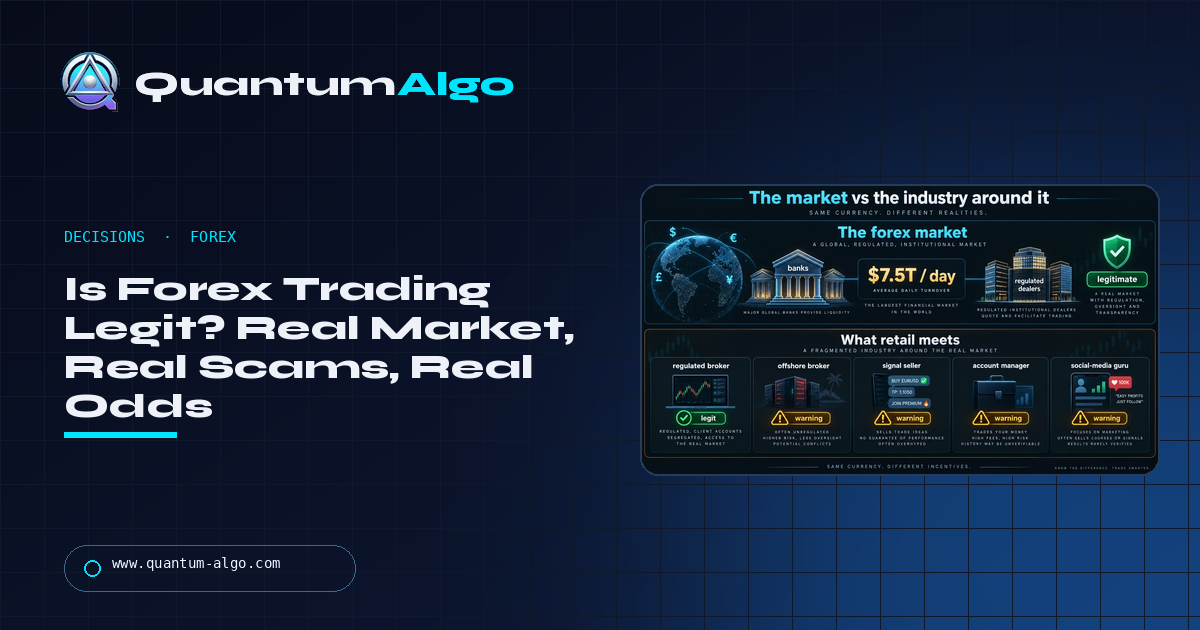
Yes — forex is the largest financial market in the world, with about $7.5 trillion traded daily between banks, funds, corporations and governments, and retail access through a regulated broker is legitimate everywhere. What is often not legitimate is the industry around retail forex: unregulated offshore brokers, signal sellers with fabricated results, "account managers" and social-media mentors. The market is real; the question is whether the company in front of you is part of it — and the regulator's register answers it in a minute.
The market and the industry around it are two different things, and every version of this question — legit, scam, safe, profitable, worth it — comes from confusing them. This page separates them: how to check a broker on a regulator's register, the five-step anatomy of a forex scam so you recognise it at step one, and the profitability question answered with the loss rates brokers are required to publish rather than a screenshot. The checker below runs the same questions on any broker or signal seller.
Indicators that prove themselves in public.
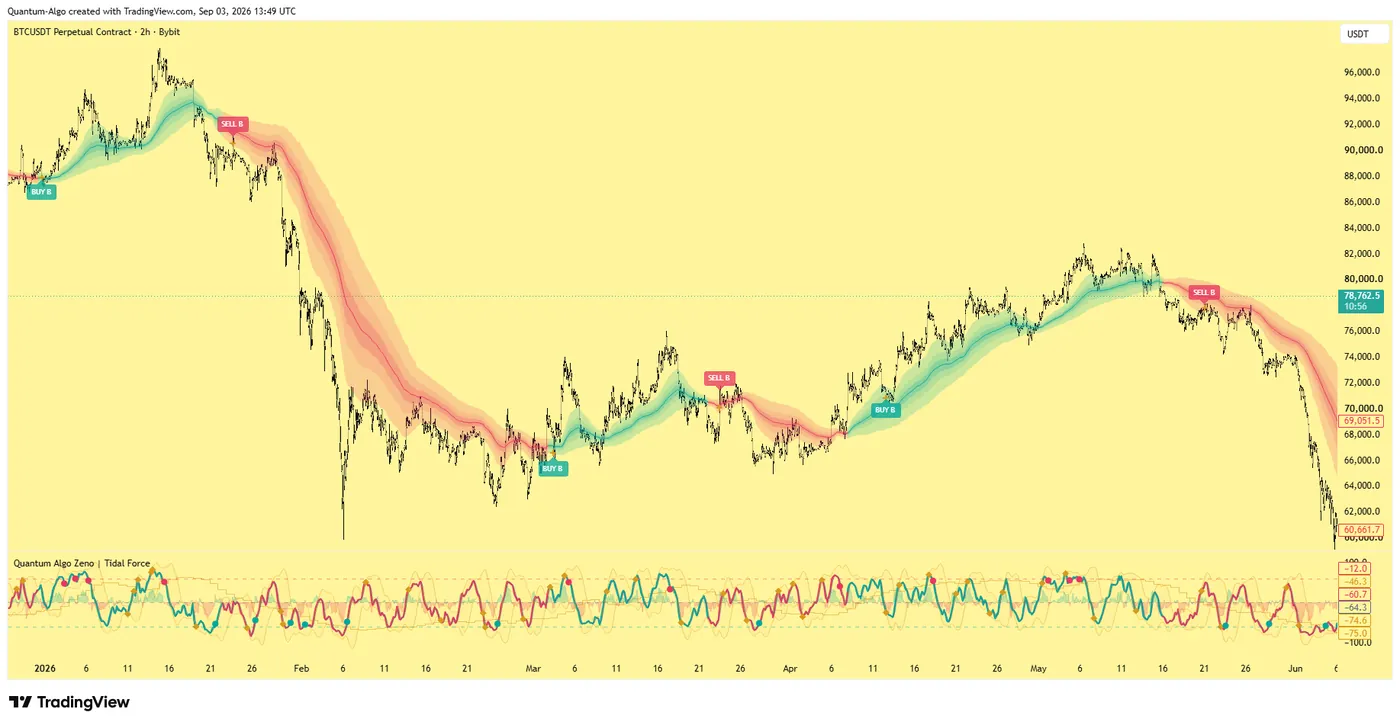
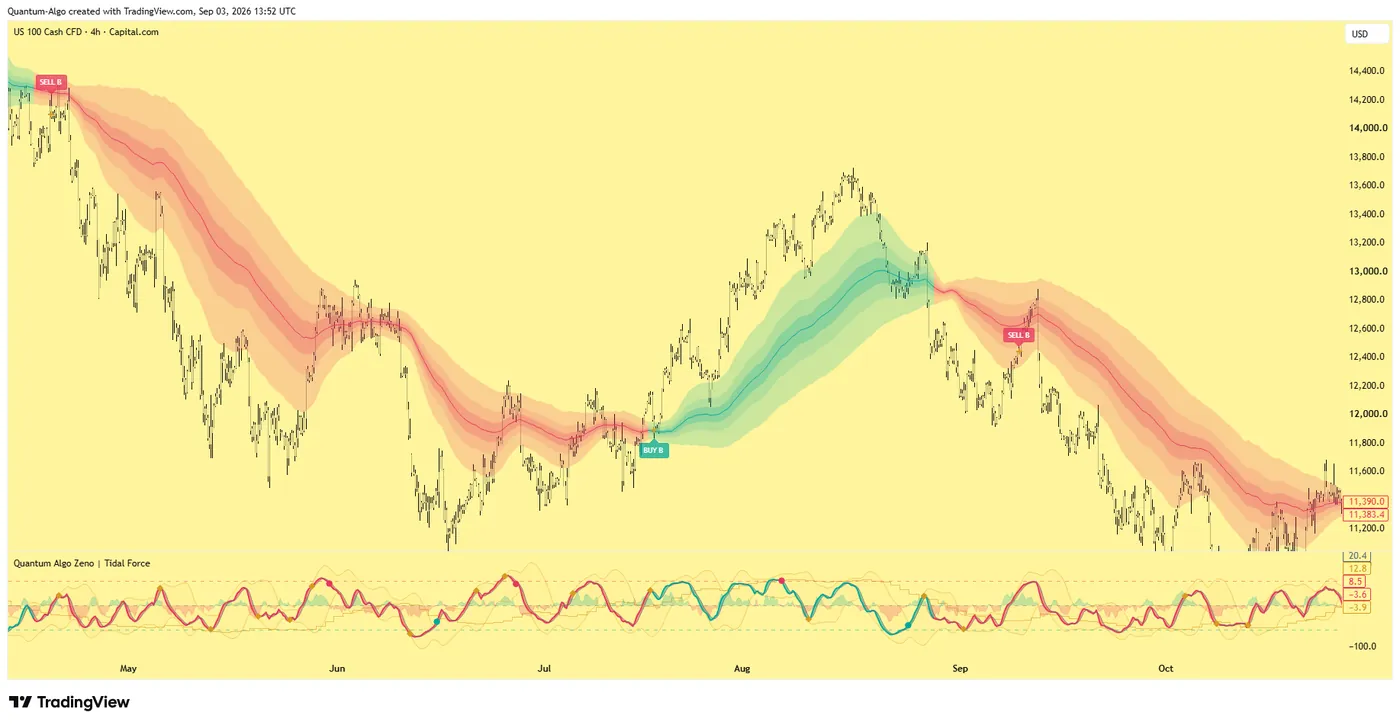
One engine, four precision tools — the Gold (XAU) Scalper, the institutional Gravity Zone, the Zeno momentum Oscillator, and Zeno Stocks for equities.
Is forex trading legit?
Yes — forex is the largest, most liquid financial market in the world, with around $7.5 trillion traded every day between banks, corporations, funds and governments, and retail access to it through a regulated broker is entirely legitimate in every major jurisdiction. What is not legitimate is most of the industry that has grown up around retail forex: unregulated offshore "brokers", signal sellers with fabricated results, "account managers" who ask for your login, and social-media mentors whose income is the course, not the trading. The market is real; the question is whether the company in front of you is part of it.
That distinction is the whole page. The first half is how to tell a legitimate broker from the rest, with the register you check and the tells of a scam laid out step by step. The second half is the other question people mean when they type this one — is forex trading profitable — answered with the numbers regulators force brokers to publish rather than with a screenshot.
The market versus the industry around it
The two-layer illustration in this guide separates what people confuse. The top layer is the market: central banks, commercial banks, corporates hedging trade, funds, and the regulated dealers that give retail traders access. It is supervised by the CFTC and NFA in the US, the FCA in the UK, ESMA-regulated authorities across the EU, ASIC in Australia. It settles trillions of dollars a day without drama. Nobody serious asks whether it is real.
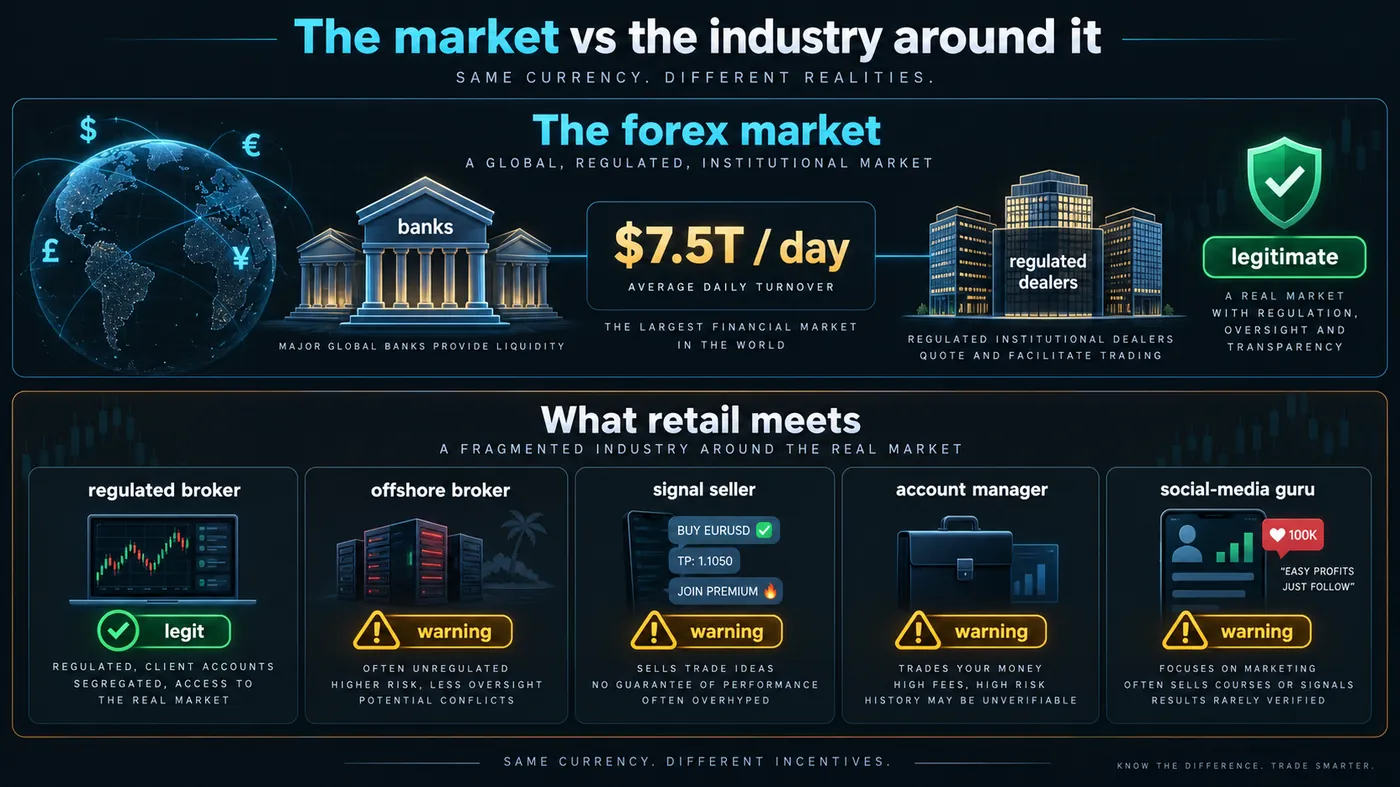
The bottom layer is what a retail trader actually meets when they search "forex" on social media: regulated brokers (legitimate), offshore brokers with no client-money rules (a warning), signal sellers (mostly a warning), "account managers" (almost always a scam), and mentors selling lifestyle (a warning). The legitimate companies are on a regulator's register; the rest are not, and the register is the first and cheapest check anyone can run.
How to check whether a forex broker is legit
- Find the regulator's public register — NFA BASIC (US), the FCA Financial Services Register (UK), ASIC Connect (Australia), CySEC's list of investment firms (EU). Search the legal entity name, not the brand.
- Match the entity on your account agreement to the one on the register. The same brand often operates an FCA entity for UK clients and a Seychelles or St Vincent entity for everyone else; the protections apply to the entity, not the logo. Our forex-brokers guide has the entity-by-entity map.
- Check the permissions and the client-money rules — segregation of client funds and negative balance protection are mandatory under FCA, ESMA and ASIC rules; they are usually absent offshore.
- Test withdrawals early — deposit the minimum, trade a month at micro size, withdraw part. A legitimate broker returns funds by the method they arrived by, within days.
- Read the risk warning on their homepage. A regulated broker is required to print the percentage of retail accounts that lose money; an unregulated one usually prints a lifestyle photo instead.
The anatomy of a forex scam
The five-step flow in this guide is the playbook almost every forex scam follows, and knowing the sequence is more useful than knowing any single tell:
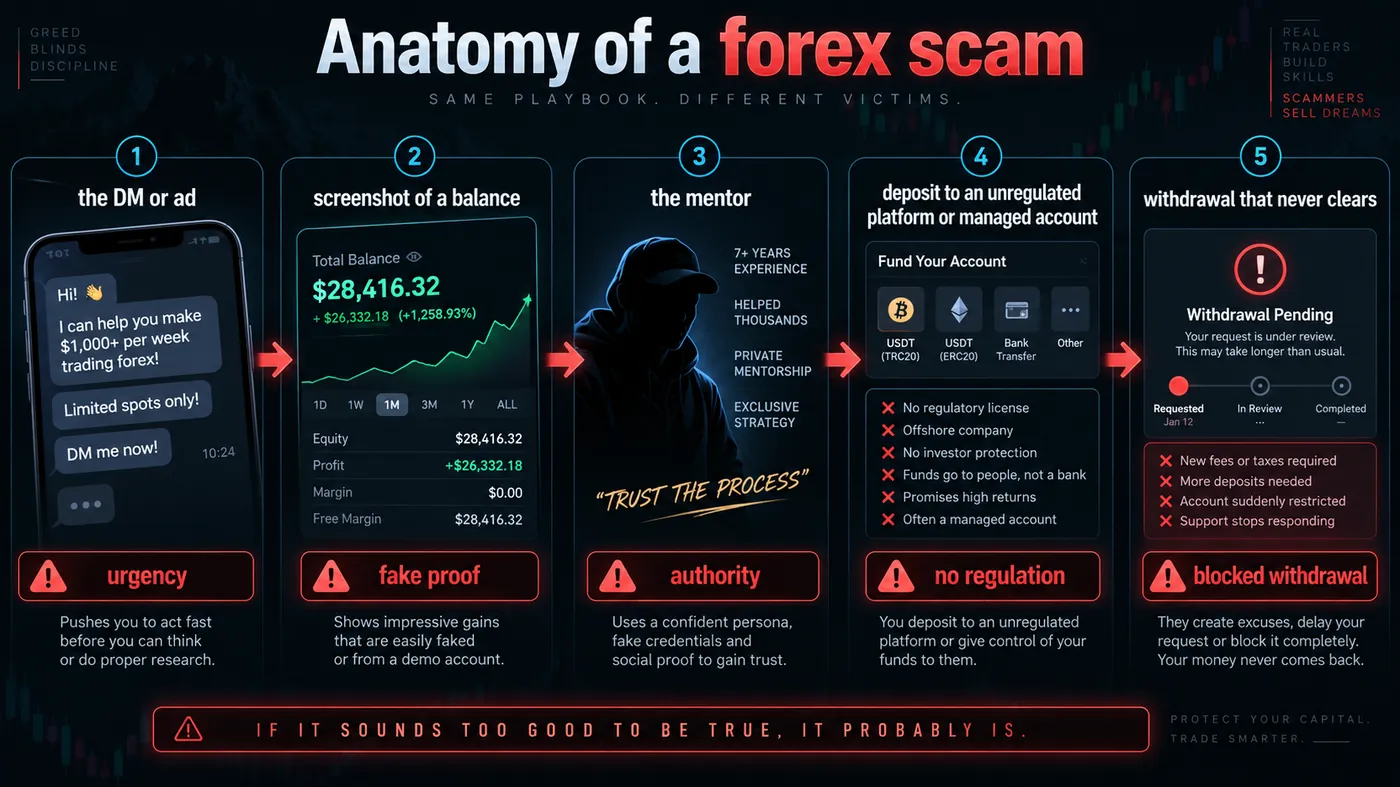
- The DM or the ad — unsolicited, urgent, "limited spots", a stranger who wants to help you.
- The screenshot — a balance, a "$28,416 this week", a car. Screenshots are free; audited statements are not, which is why scams show the first and never the second.
- The mentor — a confident person with a story and a course; the relationship is the product. "Trust the process" is the phrase.
- The platform or the "managed account" — you are steered to an unregulated broker, or asked to fund an account someone else will trade, or to hand over login details. This is the step where the money leaves the legitimate market.
- The withdrawal that never clears — "pending verification", a "tax" to release the balance, a fee to unlock the profits. There were never any profits.
If a company or person cannot be placed on a regulator's register at step four, the outcome of step five is already decided. The legitimacy checker on this page runs the same questions as a checklist.

Automate your trades. Let Quantum Algo trade for you.
Every signal executed on your own account — on your account, with the plan you define.
Is forex trading a scam?
The market is not. The word attaches to forex because of three things that are true of the retail industry: the leverage that lets a beginner lose a whole account in an afternoon, the unregulated brokers that market to people the regulated ones will not, and the signal and mentor economy that earns from enrolment rather than trading. None of those is the market; all of them are why "forex" and "scam" appear in the same search. The defence is the register, a broker's own risk warning, and the refusal to give anyone else control of your account.
Is forex trading safe?
As safe as the company holding your money and the size you trade at. A regulated broker with segregated funds and negative balance protection cannot lose your deposit to its own failure (FSCS or ICF compensation covers the remainder in the UK and EU), and cannot leave you owing more than you deposited. What it can do is let you lose the deposit through leverage, which is the risk the loss-rate disclosures describe. Safety, then, has two halves: the entity, which this page helps you check, and the position size, which our position-sizing guide sets from the stop rather than from the leverage on offer.
Is forex trading profitable?
For most retail traders, no, and the numbers are public. The loss-rate illustration in this guide shows what regulated brokers are required to print under their risk warnings: 65% to 82% of retail accounts lose money over the reporting period, median around 74%. The number varies by broker and by year; it does not vary by much, and it has not improved with better platforms, more education or lower spreads, because the cause is not the tools.
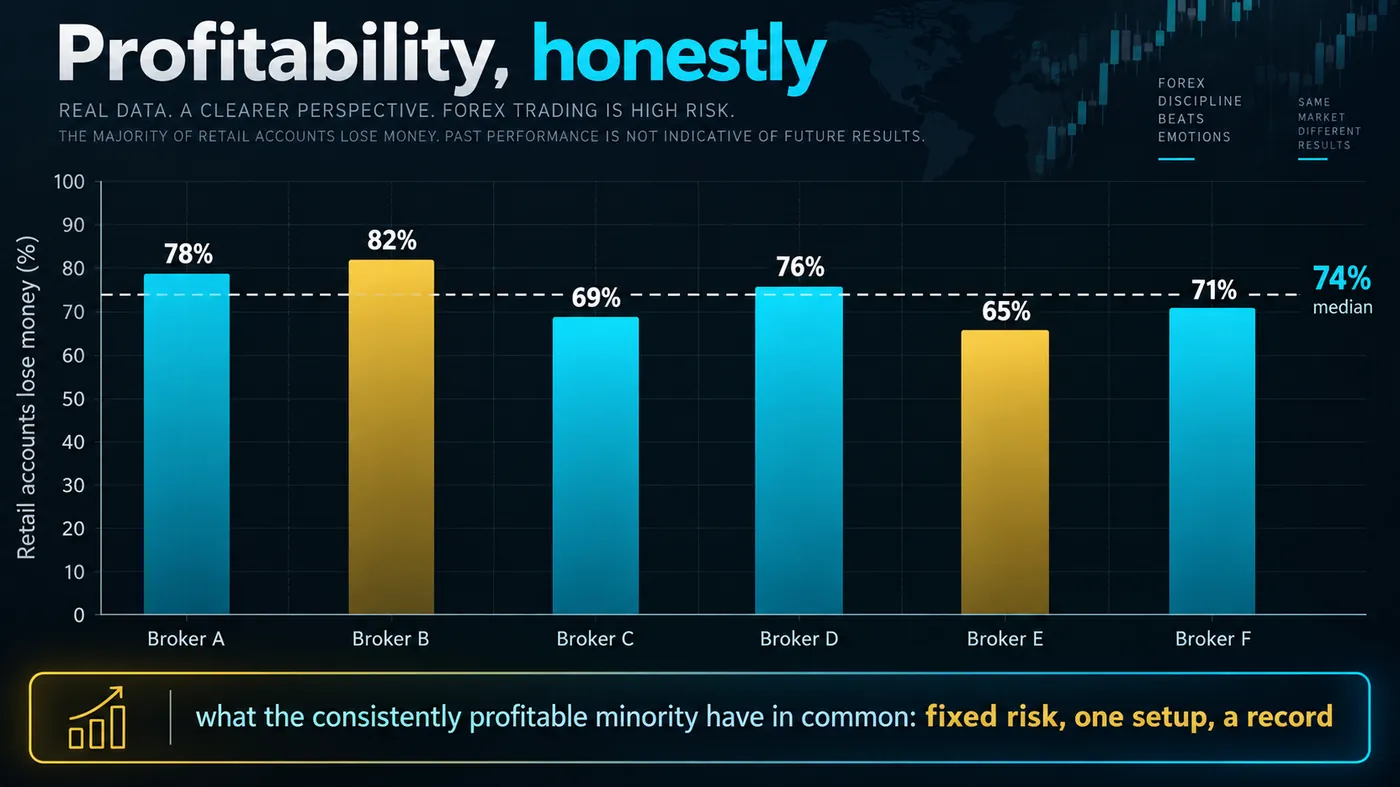
The shaded band on the chart is the honest part of the answer: the minority who are consistently profitable are not using a secret indicator. In our own records and in every serious study, they share three habits — a fixed fraction of the account risked per trade, one written setup traded repeatedly, and a journal that lets them see their own expectancy. Our "is day trading worth it" guide runs the arithmetic on what that minority actually earns at different account sizes; the short version is that profitability scales with capital, and a good edge on a $2,000 account is tuition, not income.
Can you make money trading forex?
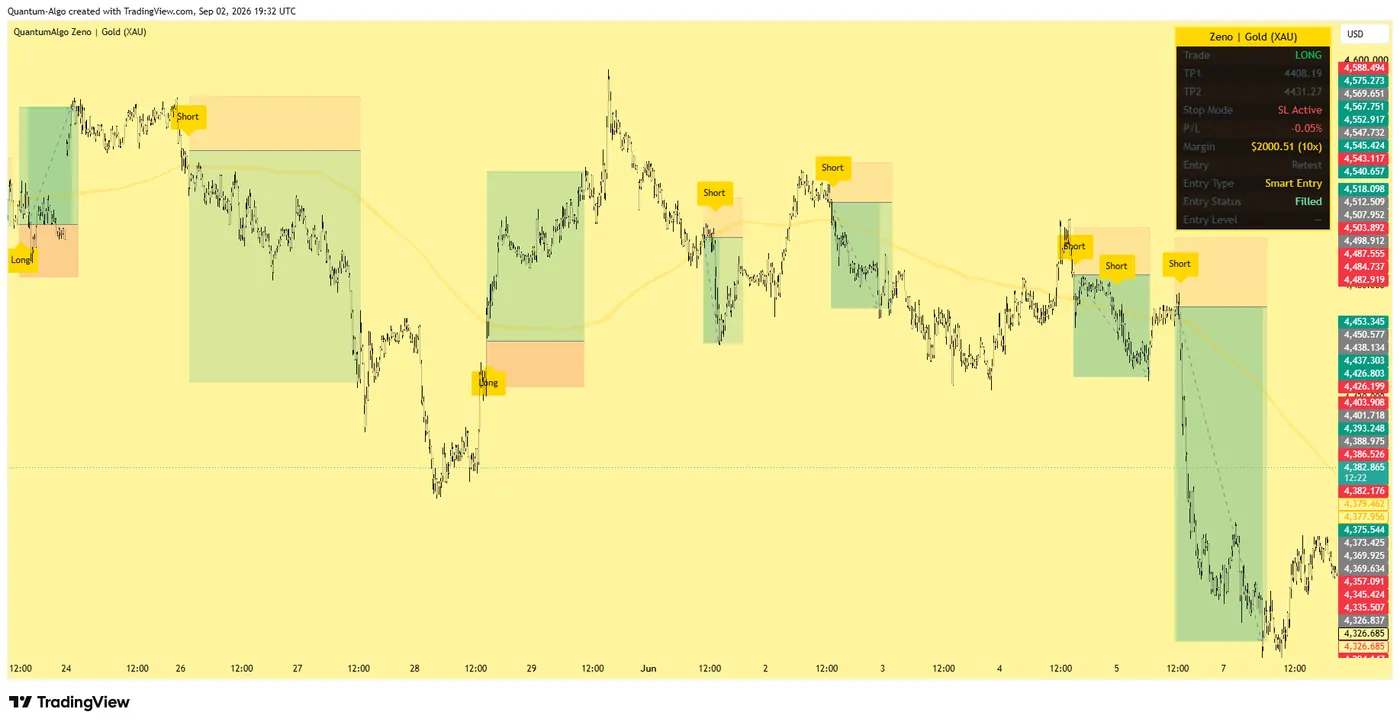
Yes, in the sense that a measurable minority do, on a public record, over years. Our own track record is an example of what the evidence for that claim looks like: every forex and gold call posted on TradingView before the outcome, stops and targets stated, losses kept in the ledger — 160 trades, 120 wins, 40 losses at the stated levels. That is not a promise of your result; it is what a legitimate claim of profitability looks like, and it is the standard to hold anyone to who tells you they make money in forex. Screenshots do not meet it. Public, timestamped, unedited records do.
Is forex trading worth it?
Worth it as a skill, for someone prepared to spend the first year learning on a paper account and micro lots with a regulated broker: forex has the tightest spreads, the clearest sessions and the most educational material of any market, and the discipline transfers to every other one. Not worth it as a way to replace a salary from a small account, for the reasons the loss rates and the arithmetic make plain. The roadmap we recommend — one market, one setup, fifty logged paper trades, then live at minimum size — is the version that is worth it; the version sold in the DMs is not.
Red flags, in one list
- Any promise of a return, a "success rate", or a "risk-free" strategy.
- Being asked to deposit with a company you cannot find on a regulator's register.
- Anyone offering to trade your account or asking for your login.
- A deposit bonus with withdrawal conditions.
- A withdrawal that needs a fee, a tax or a "verification deposit" to release.
- Pressure — countdowns, limited spots, a mentor who needs an answer tonight.
- A track record that exists only as screenshots.
Forex the market is legitimate; forex the industry needs checking, and the check is a regulator's register under the exact entity name on your agreement. Learn the five-step scam sequence so you leave at step one. Then read the loss-rate disclosures honestly: the market is real, the odds for an unprepared retail trader are poor, and the minority who win keep records, not screenshots.
◆ Interactive check
Market or industry?
Questions people ask about whether forex is legit
Yes, in every major jurisdiction through a regulated broker. Some countries restrict retail leverage or ban CFDs; the US limits retail forex to NFA-registered dealers. Trading through an unregulated offshore broker is not illegal for the trader in most places, but it is unprotected.
Yes, through the small number of CFTC/NFA-registered retail forex dealers. Leverage is capped at 50:1 on majors, hedging and CFDs are not available, and the protections are real. Any offshore broker courting US clients with 500:1 is outside that system.
Ask for a public, timestamped record that cannot be edited — TradingView ideas with stops and targets stated before the outcome, losses included. If the only evidence is screenshots and a course, the answer is in front of you.
Some providers are honest about a documented method with a public record; most sell hope. Judge any provider by the checklist in our forex pairs guide: public record, levels stated before the outcome, no broker referral requirement, no guaranteed returns.
A regulated broker with segregated client funds cannot use your deposit and is covered by a compensation scheme if it fails. An unregulated broker can do anything its terms allow, and the terms are usually written for that purpose.
Quantum Algo is TradingView indicator software with a public record of trade ideas. We do not manage accounts, do not require a broker, and publish every call — including the losers — before the outcome, which is the standard we ask you to apply to anyone else.
Through a regulated broker with micro lots and a paper account, yes — it is the market with the tightest spreads and the most educational material. The version sold in DMs with 500:1 leverage and a mentor is not the same activity.
Because of the industry around it: unregulated brokers marketing to people the regulated ones will not, signal sellers earning from enrolment, and leverage that lets a beginner lose an account in an afternoon. None of those is the market.
It has the same answer as day trading: without a tested setup, a stop and a record it is gambling on currency pairs; with them it is trading them. Our "is day trading gambling" guide has the definition.
The published loss rates say most lose. The consistently profitable minority earn in proportion to capital — a documented edge on a $2,000 account is tuition, on $50,000 it can be income. The arithmetic is on our "is day trading worth it" page.
References & Related Guides
Read next
- Scammed by a Trading Platform? What to Do in the First 72 Hours, Where to Report, and the Second Scam to Avoid
- Best Forex Brokers
- Is Day Trading Gambling?
- Is Day Trading Worth It?
- Best Forex Pairs to Trade
- How to Start Trading: 90-Day Roadmap
- Position Sizing: The Complete Guide
- Forex Market Hours
- Quantum Algo Track Record
Authoritative sources
- BIS Triennial Survey: $7.5 trillion daily FX turnover
- CFTC: fraud advisories for retail forex
- NFA BASIC: registered forex dealers
- FCA ScamSmart: check a firm and spot investment scams
- ESMA: leverage caps, negative balance protection and loss-rate disclosure
- FCA: permanent CFD restrictions and risk warnings