Is Day Trading Gambling? Where the Line Is (Edge, Risk, Record) — and Is It Legal
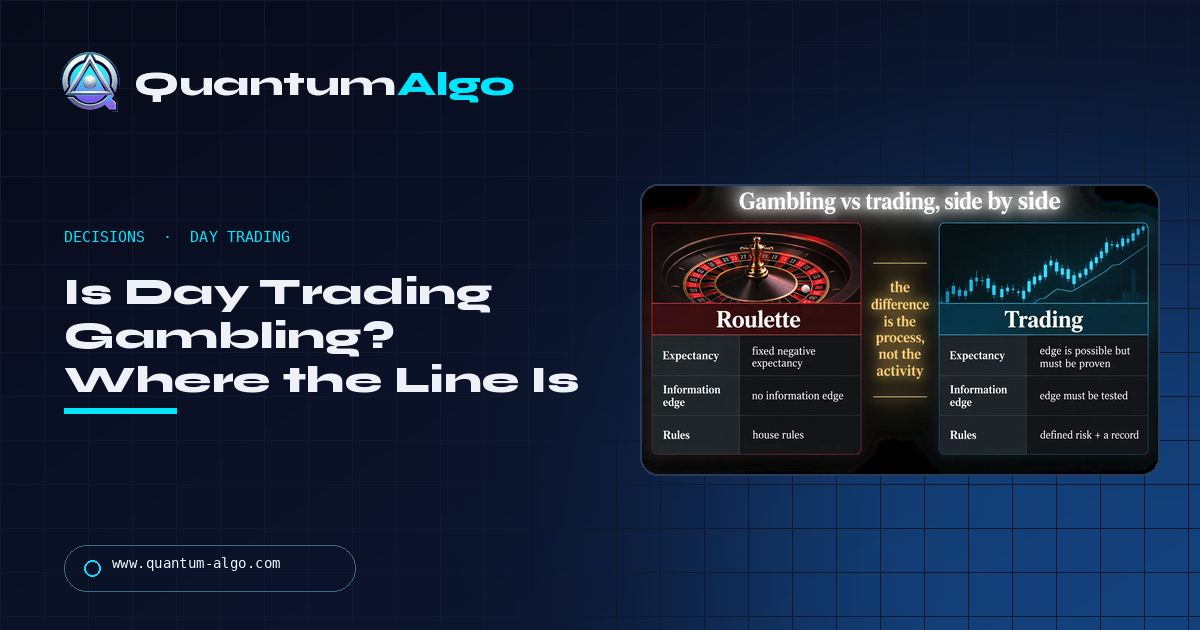
Day trading is gambling when it is done without an edge, without a defined risk and without a record — which describes most retail day trading. It is not gambling when the trader has a written setup with a positive expectancy proven over many trades, risks a fixed fraction of the account on each one, and keeps the record that shows which is true. The activity is identical; the process is the difference. Day trading is legal everywhere through a regulated broker, though several jurisdictions restrict it.
Two kinds of people ask this: relatives of traders, who mean "is my son throwing money away", and traders at 2 am after a bad day, who mean "am I fooling myself". Both deserve a definition rather than a defence, so this page gives one — what makes roulette gambling, what makes trading not, the uncomfortable middle where most retail traders actually live, and the legal question folded in. The self-check below asks six questions about last month's trades and returns a verdict on the process, not the person.
Indicators that prove themselves in public.
One engine, four precision tools — the Gold (XAU) Scalper, the institutional Gravity Zone, the Zeno momentum Oscillator, and Zeno Stocks for equities.
Is day trading gambling?
Day trading is gambling when it is done without an edge, without a defined risk and without a record — which describes most retail day trading. It is not gambling when the trader has a written setup with a positive expectancy proven over many trades, risks a fixed fraction of the account on each one, and keeps the record that lets them know which of those two things is true. The activity is the same in both cases: clicking buy and sell. The difference is the process, and the side-by-side illustration in this guide puts it in one table.
I get this question from two kinds of people: relatives of traders, who mean "is my son throwing money away", and traders themselves, at 2 am after a bad day, who mean "am I fooling myself". Both deserve a precise answer rather than a defensive one, and the precise answer is a definition.
What makes something gambling
Roulette has three properties. The expectancy is fixed and negative — every spin has a house edge of 2.7% or 5.3% and nothing you do changes it. There is no information edge — the wheel does not care what you know. And the rules belong to the house — bet sizes, payouts and timing are set by someone else.
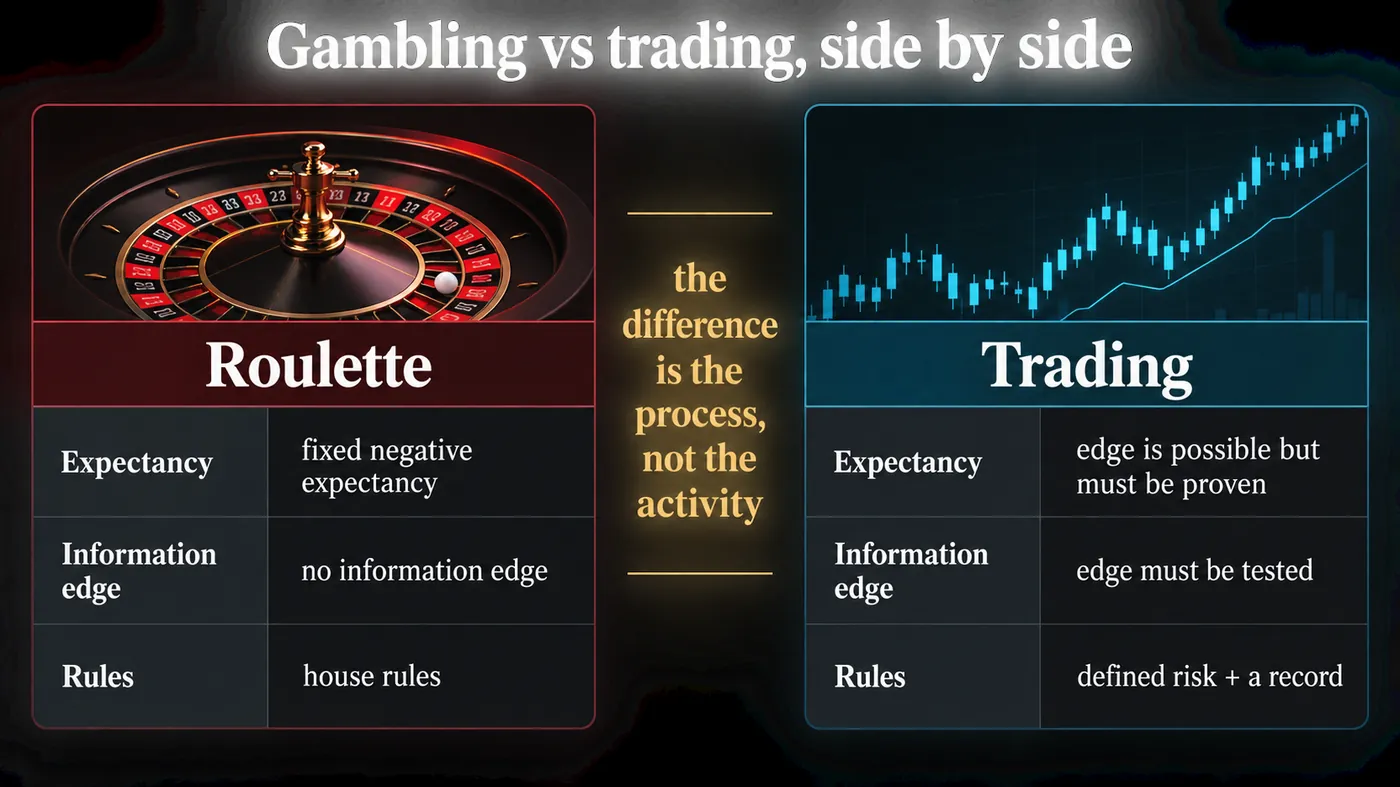
Trading has none of those properties by necessity, but it can have all of them by choice. A trader with no tested setup has an unknown expectancy that, after spread and commission, is negative on average. A trader acting on tips has no information edge. A trader without a stop is letting the market set the rules. That trader is gambling with a chart in the background, and the broker is the house.
What makes trading not gambling
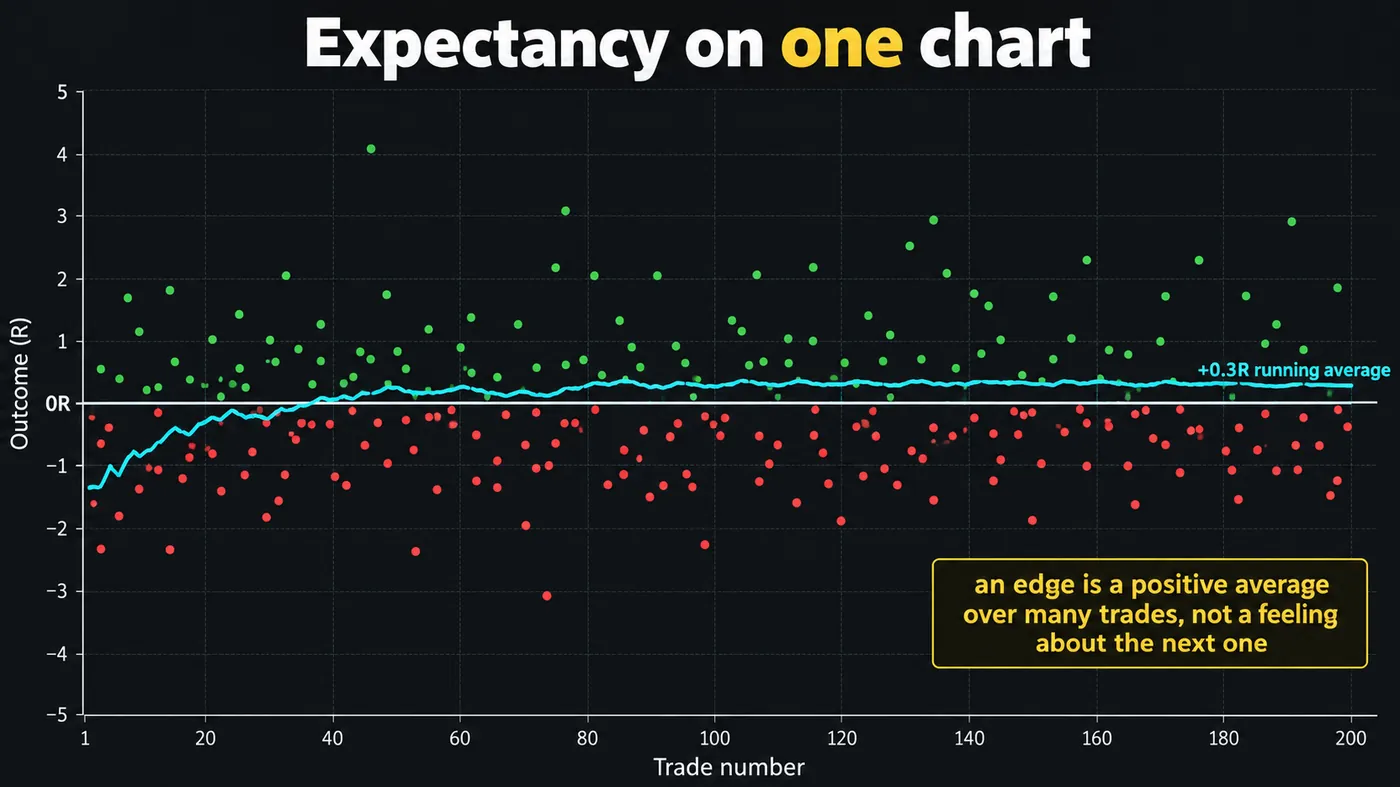
An edge you can prove. The expectancy scatter in this guide shows 200 trade outcomes in R — winners and losers scattered above and below zero — and a running average that converges on +0.3R. That line is what an edge looks like: not a feeling about the next trade, which is unknowable, but a positive average over many trades, which is measurable. If you cannot produce that chart from your own record, you do not know whether you have an edge, and "I don't know" is the gambler's position.
Defined risk. Every trade has a stop that fixes the maximum loss before entry, and the position is sized so that loss is a small, constant fraction of the account. The gambler's bet is the whole stack on a good feeling; the trader's bet is 1% on a tested rule.
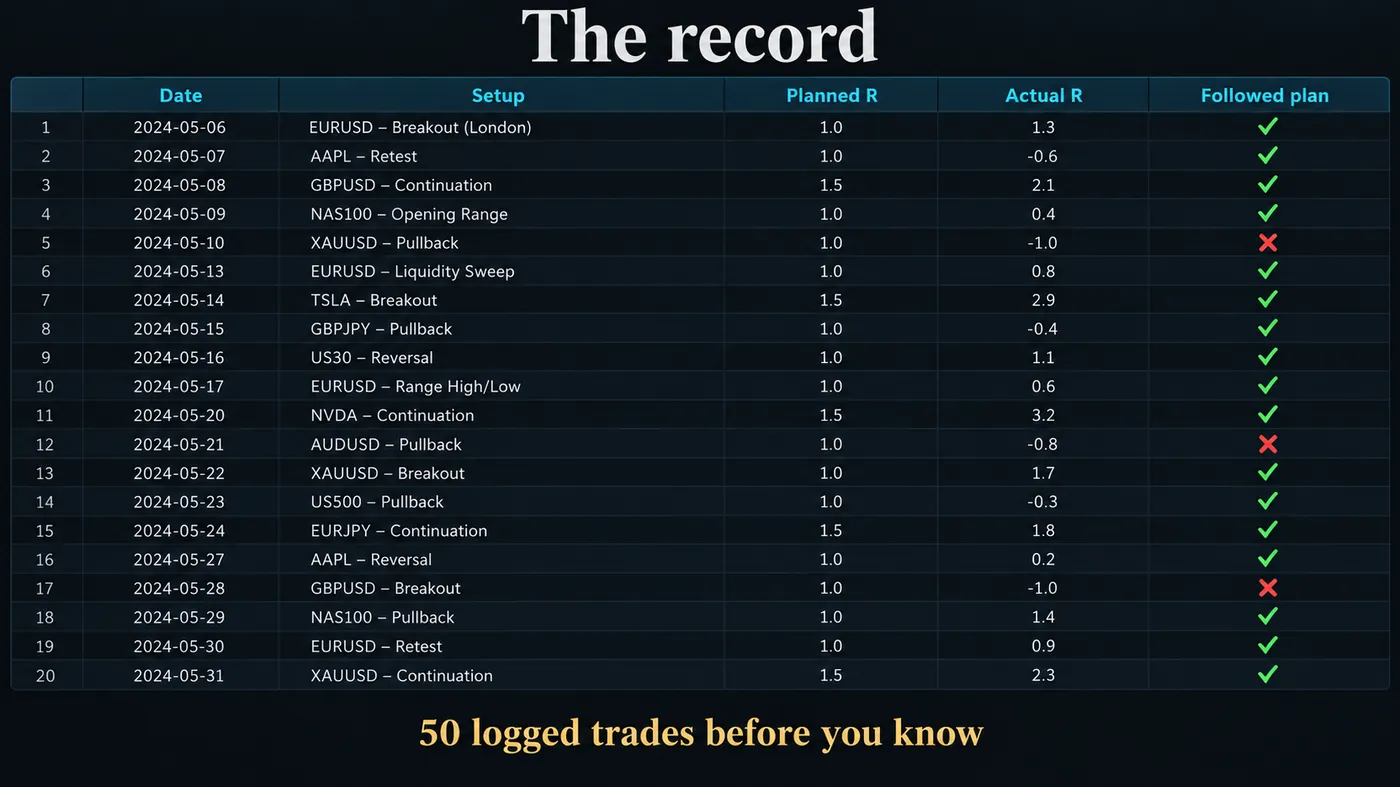
A record. The journal page in this guide is the artefact that separates the two: date, setup, planned R, actual R, plan followed or not. Twenty rows, three marked as deviations. Without it you cannot know your expectancy, cannot see your mistakes, and cannot tell the difference between skill and a lucky month. Fifty logged trades before you know anything; that line at the bottom is the whole test.

Automate your trades. Let Quantum Algo trade for you.
Every signal executed on your own account — on your account, with the plan you define.
The uncomfortable middle
Most retail traders are not clearly on either side. They have a setup they half-follow, a stop they sometimes move, and a record they keep for a while. The honest self-assessment is not "am I a gambler" but "which trades this month were gambles" — the ones taken outside the setup, the ones sized up on confidence, the ones with the stop widened. The self-check on this page asks six yes/no questions about last month's trades and returns a verdict on the process rather than the person.
The line moves, too. A trader with a proven edge who starts revenge-trading after a loss has crossed it for that afternoon. Discipline is not a personality trait; it is a thing you do again each session.
Is day trading legal?
Yes, everywhere trading through a regulated broker is legal. The confusion comes from rules that restrict day trading rather than forbid it: the US pattern day trader rule requires $25,000 of equity to day trade stocks in a margin account more than three times in five days; the EU, UK and Australia cap retail leverage and require the loss-rate disclosures quoted in our worth-it guide; some countries restrict CFDs or crypto derivatives entirely. Day trading is also taxed as income or capital gains depending on jurisdiction and frequency, and that is a question for an accountant, not a forum.
What is illegal is trading on inside information, manipulating prices, and — for the person on the other side of your screen — selling unregistered advice or managing your money without the licence to do so.
Why the question matters more than the answer
Calling trading gambling is a way to dismiss it; calling it a business is a way to excuse it. Neither helps you. The useful move is to treat it as an activity that becomes one or the other depending on what you do, and to build the three things — proven edge, fixed risk, a record — that make the answer "not gambling" true on the days you can see the record and not just the days you feel good.
Quantum Algo's public ledger is our version of that record: 160 posted trades, every one with the stop and targets published before the outcome, wins and losses kept. It is there so the question can be answered with numbers.
Gambling is a fixed negative expectancy with no edge and someone else's rules; trading is a proven positive expectancy, a fixed risk and a record. The activity is identical and the line is the process — which means most retail traders are on the wrong side of it some of the time. Build the three things, keep the record, and check it monthly. It is legal everywhere through a regulated broker; it is restricted in several places for exactly this reason.
◆ Interactive check
Do you know where the line is?
Questions people ask about trading and gambling
No. Trading regulated instruments through a licensed broker is investing activity, not gaming, in every major jurisdiction — even though leverage restrictions and disclosure rules exist because regulators recognise how many retail traders treat it like gambling.
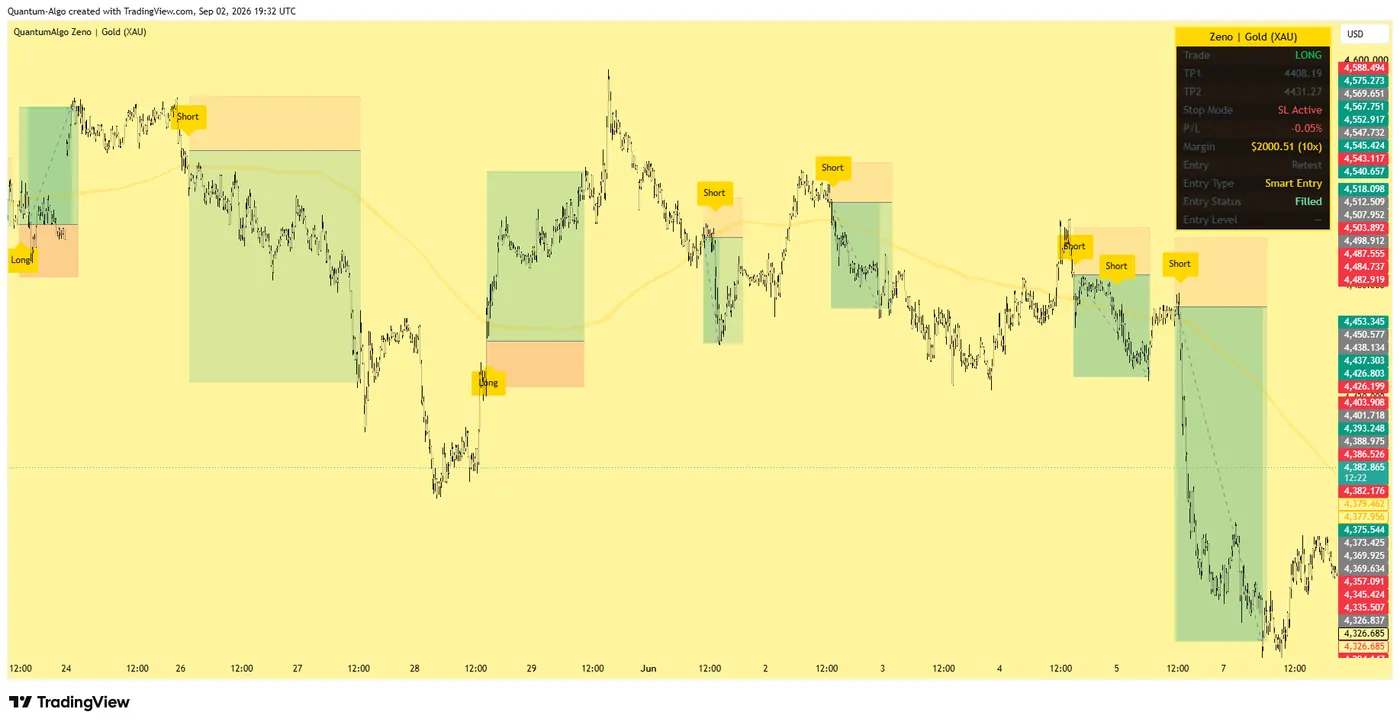
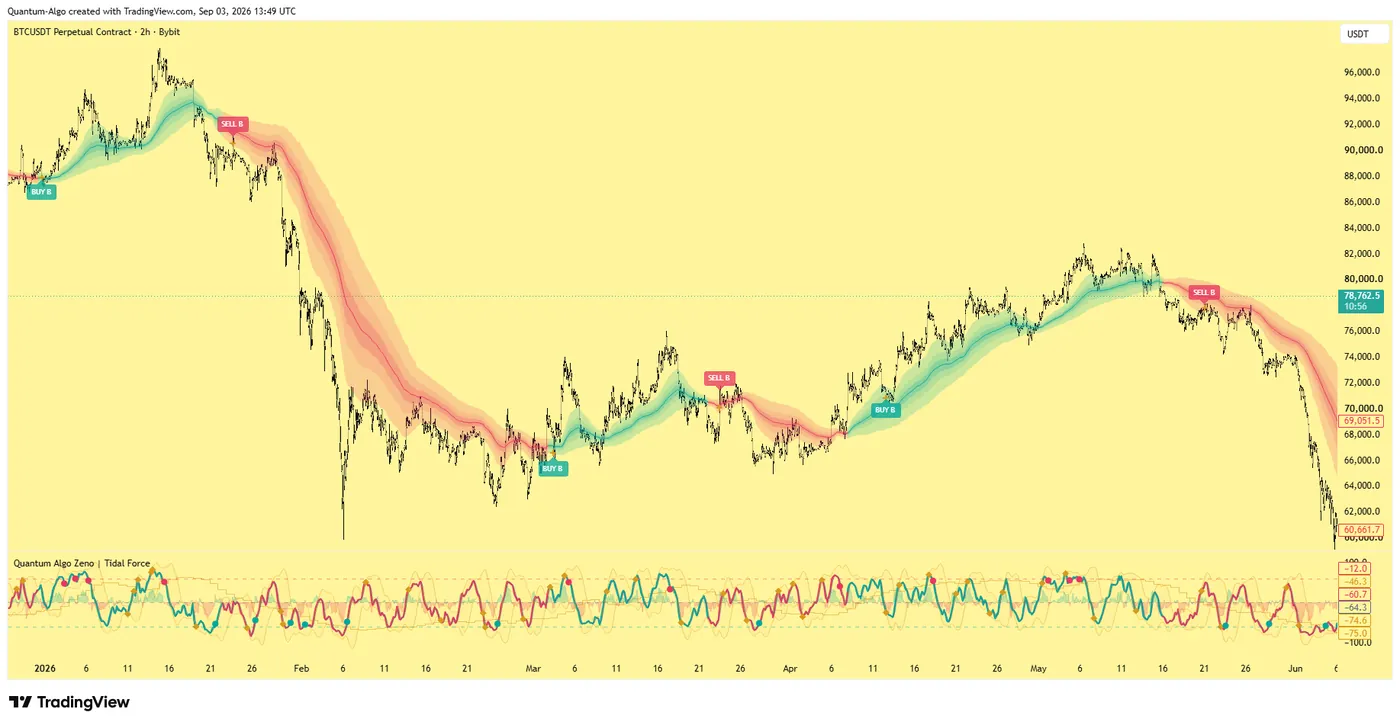
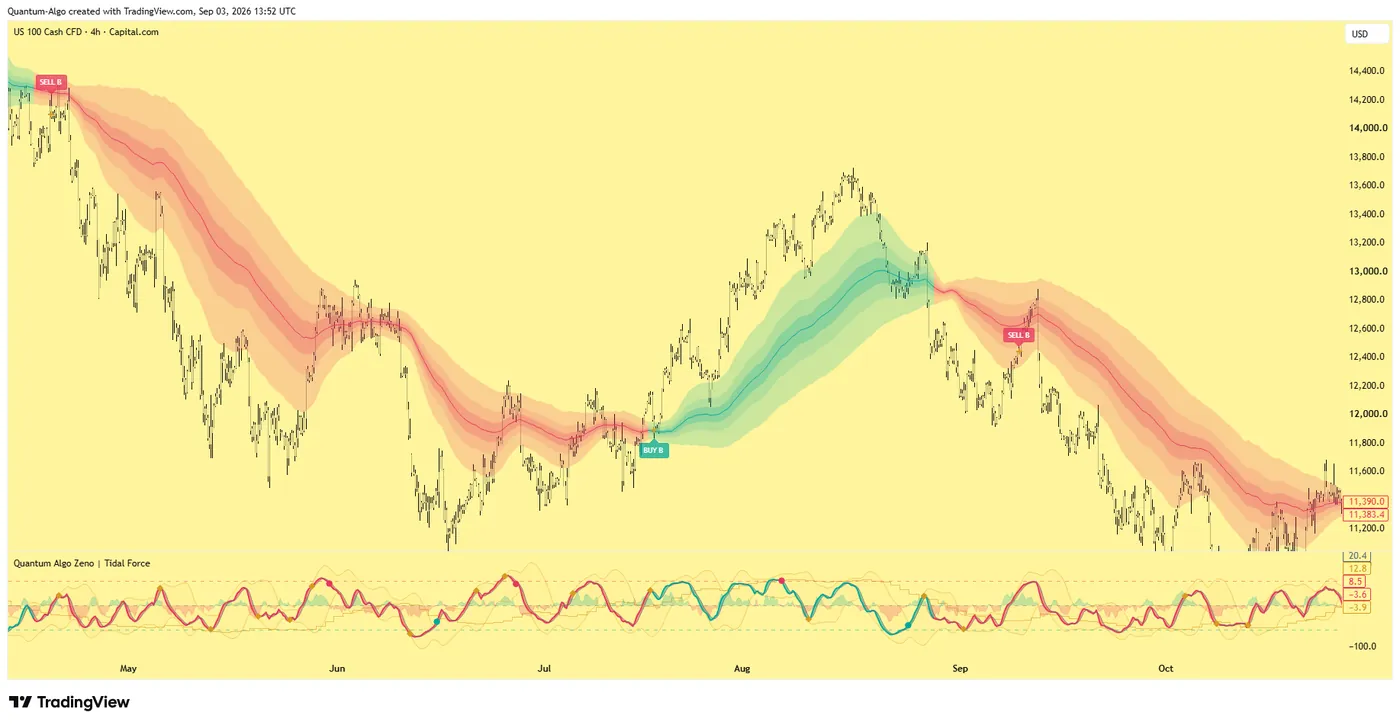
Indicators do not settle it. An indicator-based setup with a tested positive expectancy, fixed risk and a record is trading; the same indicator followed without any of those is gambling with extra lines on the chart.
A bet has a fixed, known, usually negative expectancy set by the house. A trade's expectancy is unknown until measured, can be positive, and is determined by the trader's own rules — which is both the opportunity and the responsibility.
Yes. The same mechanisms — variable rewards, chasing losses, escalating size — operate in trading, and the "uncomfortable middle" section above describes the behaviours. If trading is affecting money you need or relationships, treat it as you would any other compulsive behaviour and seek help.
We publish every trade idea with its stop and targets before the outcome and keep the losers in the ledger. That is the record that lets anyone check the expectancy — the opposite of gambling's defining feature, which is that the odds are hidden from you.
Winning does not settle it. A gambler wins too, sometimes for months. The test is whether the wins came from a process with a proven expectancy and fixed risk — visible in a record — or from a run of luck you cannot distinguish from skill.
Same test as any market: without a tested setup, a stop and a record it is gambling on a volatile asset; with them it is trading a volatile asset. Crypto's volatility and 24/7 access make the gambling version easier to fall into.
Buying a diversified index fund has a positive expected return backed by a century of data and no house edge — it is the least gambling-like thing you can do with money. Picking individual stocks on tips moves back toward the line.
Fix the three things: one written setup, a stop and fixed risk on every trade, a journal you fill in at the close. Then run the self-check monthly on the record, not on your feelings about it.
The signal supplies the edge and the risk levels; the record and the discipline are still yours. A subscriber who takes every signal at fixed risk and logs it is trading; one who cherry-picks, sizes up and skips stops is gambling with a better chart.
References & Related Guides
Read next
- TradeZella Review (2026): The All-in-One Trading Journal — Where It Earns Its Price and Where It Doesn't
- Is Day Trading Worth It?
- How to Start Trading: 90-Day Roadmap
- Trading Journal: Complete Guide
- Trading Psychology
- Pattern Day Trader Rule
- Monte Carlo Simulation for Trading
- Why Do Most Traders Lose Money?
- Quantum Algo Track Record
Authoritative sources
- SEC: day trading — your dollars at risk
- FINRA: day trading
- ESMA: retail CFD restrictions
- BeGambleAware: support for gambling-related harm
- Investopedia: expected value